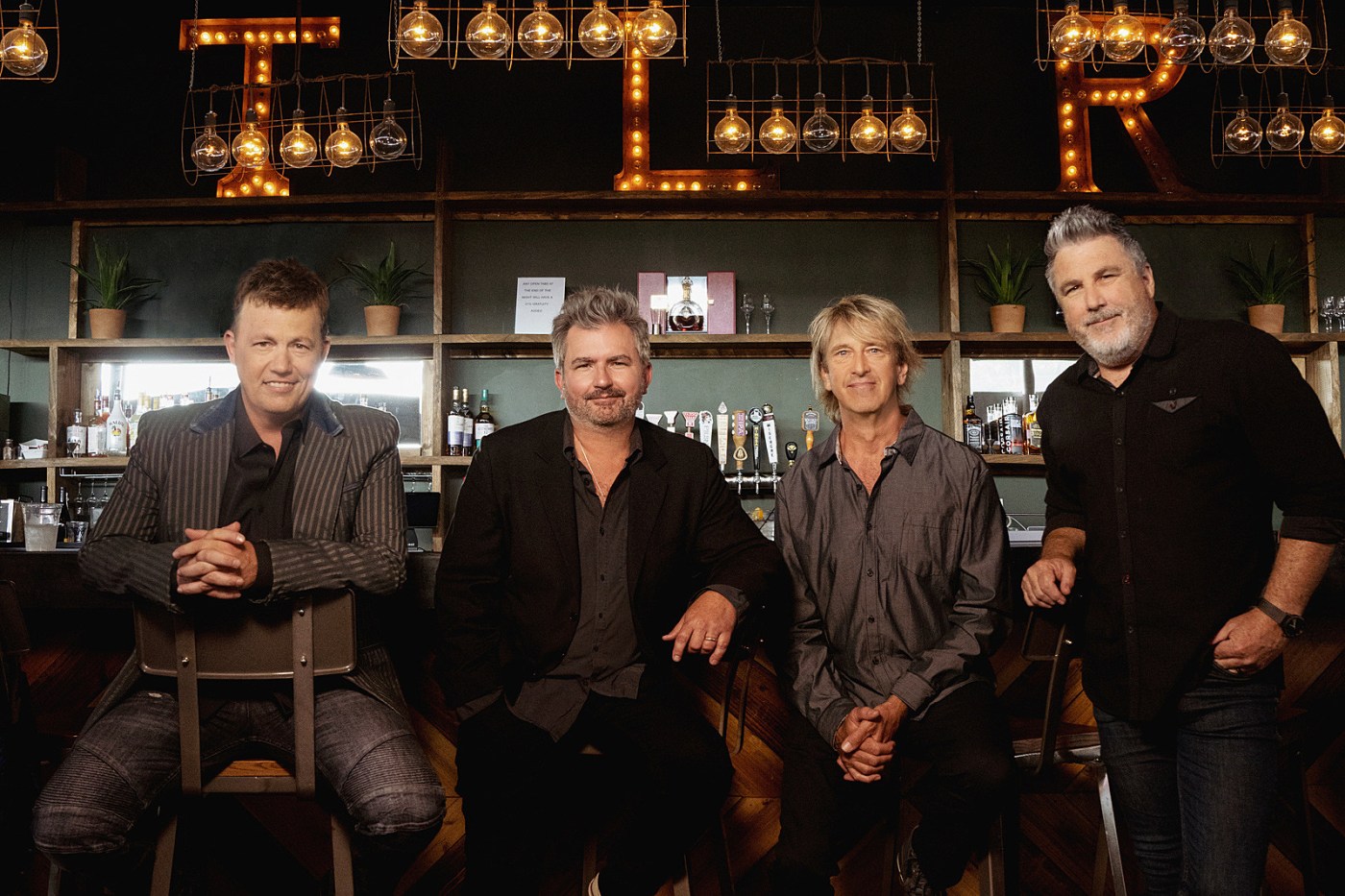
When writing the story of country music in the late 90s and early 2000s, and largely, music in general, it’d be impossible to properly tell it without including a chapter about Lonestar.
After building a foundation with two successful albums in the mid-90s, the band broke down the walls on March 22nd, 1999 with the release of “Amazed,” an eight-week chart-topper on the Billboard country charts that also found its way to the top of the pop charts as well; the first country song to achieve such a feat since “Islands in the Stream.”
The good times kept rolling for the band; in all, amassing ten chart-topping songs and establishing a loyal fanbase that has followed them for more than three decades.
The band, however, isn’t quite ready to stop adding chapters to their story, though, as they entered their third decade with the release of Ten to 1, which features re-imagined recordings of each of their chart toppers with new lead singer, Drew Womack, at the helm; injecting new life into the band as they continue to add to their already-legendary resumé.

Before all of that, though, the band formed as a quintet in 1992, playing together for the very first time in the recording studio.
“Before we could get booked, we had to have a demo tape to show what we sounded like. The first time we ever played together was in a small recording studio. It was unheard of,” says guitarist Michael Britt. “I remember rehearsing in the Nashville Musician’s Union building, and people would ask how long we’d been together, and they were surprised when we told them we’d just started. It just sounded right. John [Rich] and Richie [McDonald] were great singers. The harmonies were effortless. It clicked right away.”
It clicked so well, in fact, that after cutting their teeth for a few years on the road, the band caught the ear of a major player in the music industry, who quickly offered them a record deal.
“Back then, you could make a decent living playing bars. We did that for about two and a half years. When they opened the Wild Horse Saloon in Nashville on Second Avenue, we jumped at the chance to play,” says Britt. “That got us attention from labels. Joe Galante was a big wig at RCA/BNA Records. Somehow, we got on his radar. We played acoustically for Joe in his office, and a couple weeks later, he came to the Wild Horse Saloon and offered us a deal with BNA Records.”
Soon after the ink dried, the band entered the studio with producer Don Cook, who was in the midst of great success with Brooks & Dunn, and co-producer Wally Wilson, which gave the band their first taste of how a major album was made.
“That was an eye-opening experience,” says Britt. “We had done some minor studio stuff, but we’d never done an album the way Nashville does albums. The quality of studio musicians and producers in Nashville is staggering. We went into record that first album, and I felt like I had so much to learn all of a sudden.”
After completing their debut, self-titled album, BNA Records released the band’s debut single, “Tequila Talkin’,” to radio on August 7, 1995, which they were able to hear coming over the radio airwaves for the first time soon after.
“The album was done, and we were promoting it by playing in Walmart parking lots. They had a stage called Country Music Across America; they would drag a stage around Texas and we would play in the parking lot. If it was raining, we’d be in the store,” says Britt. “One day, I heard ‘Tequila Talkin’’ on the radio for the first time. It felt like we’d made it, finally. It was so exciting; we were screaming, hooting and hollering.”
The hooting and hollering continued when the band’s second single, “No News,” topped the charts in April of the following year.
“That was crazy. There were two or three other bands coming out at the same time, so there was a lot of competition, plus, all of the established acts were releasing singles too, so everybody was always competing for airplay,” says Britt. “I think ‘No News’ was such a different-sounding song with all of the pop culture references; it caught people’s ear and it put us on the map. After that, it was just a matter of keeping the bus rolling.”
The bus kept rolling to the tune of two more top 10 singles and another top 20 by the time the album had run its course, which brought about the pressures of achieving that success again when recording their sophomore album, Crazy Nights.
“We were so new and so green, everything was coming at us way too fast,” says Britt. “We were happy and proud, but at the same time, we had it in the back of our minds that we didn’t want to be a one hit wonder. We put a lot of pressure on ourselves to make a second album that wouldn’t be a slump.”
When the album’s lead single, “Come Cryin’ to Me,” jumped to the top of the charts, any fear of a sophomore slump dissipated.
“That was great; it kept our momentum going,” says Britt. “Between that and ‘Everything’s Changed,’ things kept moving forward.”
While radio was continuing to take notice of the band, the industry was as well, as they earned an ACM Award for Top New Vocal Group/Duet in 1996.
“That was one of the most exciting nights of our lives. It felt like we really made it,” says Britt. “The fact that we were on national TV winning an award was crazy. I remember calling my parents the night of the show and asking if they saw me on TV. They said they didn’t because the camera man cut me off. We had so many guys in the band, and I don’t know if they thought I was just the trophy presenter, but they cropped me out of the shot. That’s my claim to fame [laughs].”
While things continued pushing forward, their record label began creating a rift between the band and co-lead vocalist, John Rich.
“We turned in the Crazy Nights album with John and Richie both singing half of the album, and the label came back and said they wanted Richie singing more. John felt kind of pushed aside,” says Britt. “He didn’t want to just be a bass player in the back; he was truly too talented for that. And it felt super hard to say no to the label. We thought they’d drop us. It wasn’t long after that that John left.”
Moving forward as a four-piece, the band began searching for songs for their third album, soon finding a demo of a song that would change each of their lives.
“I remember the demo for ‘Amazed’ vividly. Chris Lindsey, Marv Green and Aimee Mayo wrote the song, and a singer named Bill Luther sang on it. He had a very Rod Stewart, raspy voice,” says Britt. “From the second we heard it, we thought it sounded like us. It felt like it was right in our wheelhouse; it felt like it could be a Lonestar song.”
When “Amazed” was released as the second single from their third album, Lonely Grill, the song skyrocketed to number one on both the country and pop charts.
“I don’t know what it was about it: some combination of Richie’s singing, the production or the time in the world, but it struck a nerve with people,” says Britt. “It just kept going. It was close to number one, then it got to number one. Then it stayed at number one for eight weeks. Then it crossed over to the pop charts. That was a song that wouldn’t stop.”
As the song took the band to unprecedented heights, it also brought heightened stress and pressure.
“We probably didn’t handle the success that well. Looking back, most of my memories from that time are of stress. You don’t want it to end. It was the biggest thing we’d done, and we didn’t want it to be the last thing we did,” says Britt. “We always felt pressure to top whatever we had just done, but when you have a song like ‘Amazed’ that’s so big and beyond anything you could imagine, you know there’s no way to top it. But at the same time, we didn’t just want to fade away and disappear.”
Instead, the final three singles from Lonely Grill, “Smile,” “What About Now” and “Tell Her,” each topped the charts as well, with the latter two sitting atop the charts for four and two weeks, respectively.
“At that point, it felt like we were on a machine. We were strapped into a roller coaster ride and didn’t know where it was going,” says Britt. “We had gotten to a level that was beyond anything we’d prepared for. We outgrew our management, because even they weren’t accustomed to having that kind of success. It was crazy.”
As the turn of the century came and went, the band entered the studio again to record their fourth album, I’m Already There, which spawned a title track that became both a career-changing song and an important song for many in the wake of tragedy.
“Richie wrote that song when we were on the Lonely Grill radio tour. We’d go out for six weeks at a time and hit two or three radio stations a day. We were really missing home, and he’d be in the front of the bus writing that song, so we’d heard snippets of it being written,” says Britt. “Not long after we put it out, September 11th happened, and all of these troops started getting deployed overseas for long periods. It just happened that the song was out and big while it was happening. It became an unofficial anthem for our men and women overseas, and we’re very proud of that. It’s much more meaningful to have that than just us missing home, which was the origin of the song. I think that song helped a lot of people get through.”
By the time their next album, Let’s Be Us Again, had run its course, so had the ten year anniversary of the band’s formation. And while there was still plenty of momentum keeping the wheels moving forward, there were also forces that were slowly starting to make them come off as well.
“The same time we were riding that momentum, I could see the cracks starting to break and rifts between people. Richie was writing with a lot of Nashville songwriters and less with members of the band. I felt like he was getting pulled in the direction of being a solo act, and we were still trying to keep the band together,” says Britt. “At the time, I couldn’t see it, but I felt like we were trying to keep the wheels on the car. We were on the road all time and getting burned out. We were at each others’ throats. Ten years is a long time when you’re hammering it out on the road. It took a lot out of the band.”
After two more albums on BNA Records, Coming Home and Mountains, label shakeups forced the band out of their record deal, which in turn, led to McDonald leaving the band.
“When we signed our record deal, we signed for ten albums, including greatest hits. We had finished our tenth album, and that was right about the time RCA, BNA and Sony were combining. They suddenly had way too many artists and not enough staff to take care of them,” says Britt. “We finished the deal and they didn’t re-sign us. That’s when Richie decided to leave. He’d been toying with the idea in his head before then, but not having a record deal pushed him out.”
Following McDonald’s departure, the band enlisted Cody Collins to sing lead, and while his membership was brief, Britt says that period was integral for the band and its chemistry.
“When John left the band, we still had Richie, but when Richie left, we had to go out on a limb and find somebody. Cody was singing at a club in Georgia, and we thought his voice would sound good on our music,” says Britt. “Those four years showed us that Lonestar, the brand, is bigger than one person. We felt more creative, and we were more involved in our career from a production and songwriting standpoint. The Cody years brought us together as a band; especially me, Dean [Sams] and Keech [Rainwater]. It created the glue. And ever since then, we’ve had that glue.”
After a 2016 reunion album with McDonald, the singer once again left the band, opening the door for former Sons of the Desert frontman Drew Womack to take the reins.
“I’ve known Drew since the early 90s. When Richie left again, Drew had just happened to message me on Facebook the week prior about guitars. We started talking about life. He was asking about the band and I was asking what he was doing, because I hadn’t talked to him in about ten years,” says Britt. “A week later, Richie quit the band. It was totally fate. He asked what we were going to do, and I said that we’d have to find somebody who could sing ‘Amazed’ for the foreseeable future. He said he could fill in, and I told him I’d love for him to be part of the band. Richie quit on a Monday, and by Friday, Drew was in the band. It was the most fateful thing that could’ve happened for Lonestar.”
With Womack now in tow, the band hit the studio to record Ten to 1, which features re-imagined versions of each of their ten chart-topping hits that capture the growth in both the songs and band as a whole.
“We wanted to get Drew’s voice out there. It makes no sense to have Drew’s voice on all of these songs live and not be able to go home and get a version of it,” says Britt. “Some of those songs morphed over the years. We wanted to chronicle what they’re like now. We wanted it to sound like we’d just recorded the album that week, and I feel like that’s what happened.”
And while they looked back on their iconic hits with Ten to 1, they’re also looking forward to new original music with Womack.
“Drew is effortless to work with. He’s a consummate professional. There were times where John and Richie weren’t all in with the band. Drew is happy to be in a band, because that’s what he’s always wanted,” says Britt. “On top of that, he’s a great songwriter. He and Dean have already written a few songs, so it’s in progress. It’s all about the fun of making music. We don’t want to jump on the treadmill again where we’re trying to put out singles and get radio play. We want to cut songs that we’re proud of and that speak for us.”
And now, three decades into his time in Lonestar, Britt is proud to be at a point where the band has taken full control of its career and can make music that wholly fulfills them.
“This is the best place to be. If you think about it, this band has been together for thirty years. My oldest kid is only 21, it’s crazy!” says Britt. “We’re enjoying playing music. The fact that we’re able to do it at a high level with Drew, I can’t explain how much lighter everything is. There’s no cloud over us. We get to see people sing along with ‘Amazed and ‘I’m Already There’ every night. We’re having fun and still making people happy on the road.”
With plans to enter the studio with Womack for new music in 2024, Lonestar plans to enjoy their busy touring schedule for the rest of the year, playing stages for the fans that have helped them continue to write new chapters in their three-decade career.
“We love going on the road and playing for happy people. We were just in Idaho, and it was one of the best shows of our career. I’ve never seen a crowd react the way they did. You would’ve thought we were The Beatles on The Ed Sullivan Show,” says Britt. “The fact that we still get crowds like that means that we did something right along the way.”

 Pro Country
Leave a comment