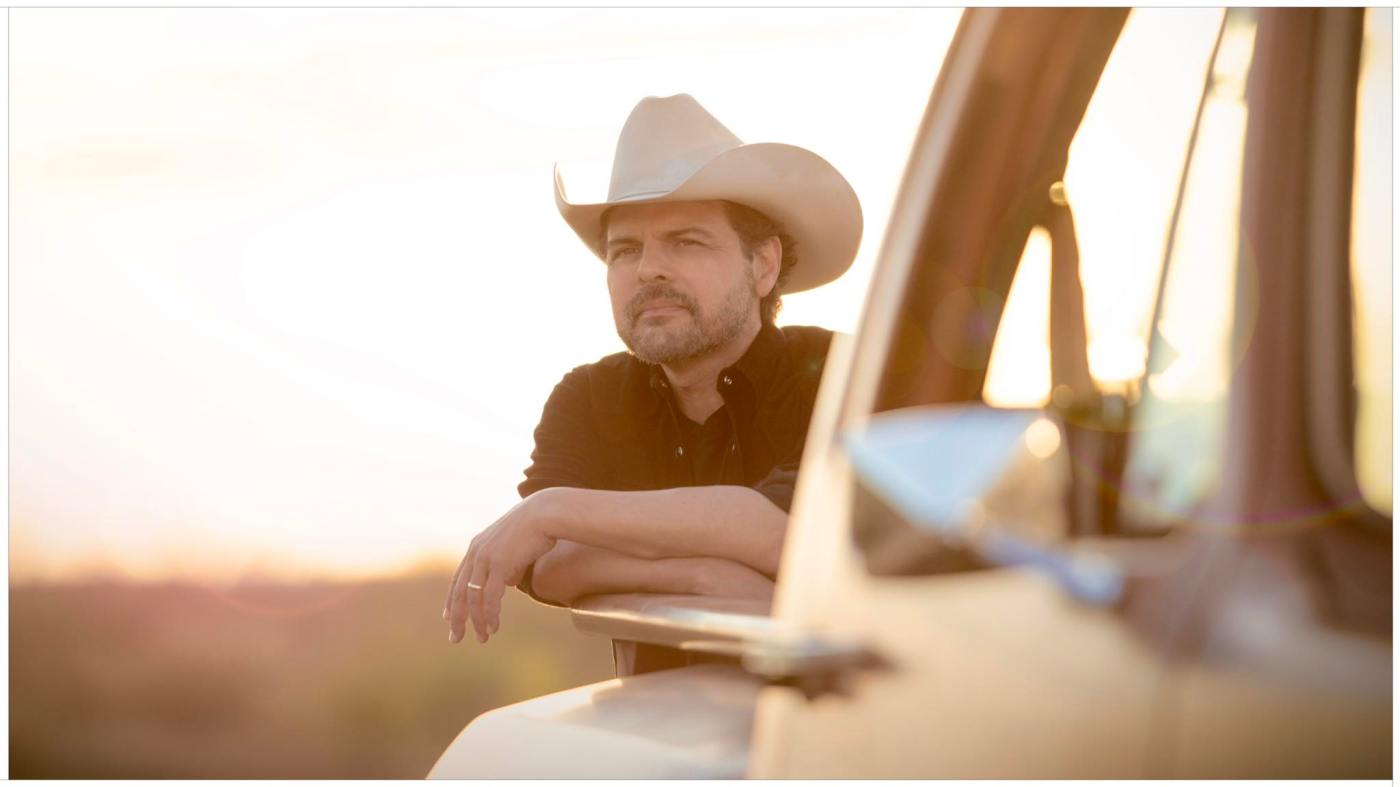
Oftentimes, the life of a country music singer is a roller coaster ride.
If the artist is lucky, they’ll have a few good years on the ride. Rick Trevino, though, has been on board for over three decades, and if he has anything to say about it, he won’t be getting off any time soon.
In those three decades, Trevino’s ride has taken him to the top of the country music charts, to stages all around the country, and most recently, to his latest stop, a new single, fittingly titled “The Ride,” a sentimental song that offers sage advice for those about to embark on their own journey.
Before all of that, though, Trevino was soaking in his father’s early musical influence and developing an early love for music.
“My dad was a Tejano singer, and he played the bass and guitar too. In the 70s and 80s, we listened to everything from Tejano music to pop music to country music,” says Trevino. “It felt inevitable that I’d be involved with music somehow.”
At his parents’ insistence, Trevino began taking piano lessons.
“I took lessons from the time I was five until the time I was in college,” says Trevino. “Sometimes, the jock side of me wanted to go outside and play football or baseball with my friends. My dad told me I had to do my lessons before I went outside. My friends would come to my house and knock on the door, and my parents would say that I’d be out in a minute.”
With great teachers, though, those lessons soon felt like less of a chore.
“Since my dad was in music, he would make it interesting for me. He’d buy a Kenny Rogers or Elton John record, and we’d learn what was on the records,” says Trevino. “I had a great teacher too, Beverly Gordon. She would nourish what I wanted to learn and buy sheet music for me. When you get older, start doing talent shows and getting attention from girls, it’s fun! [laughs].”
As he entered his college years, Trevino turned down a small scholarship to play baseball at Memphis State University, instead electing Texas A&M, where his love of country music blossomed.
“My freshman year, I was really interested in the storytelling of country music. My roommate and I would listen to artists from George Strait to Reba McEntire, Garth Brooks to Keith Whitley,” says Trevino. “I loved the stories that were being told, and I started gravitating towards them.”
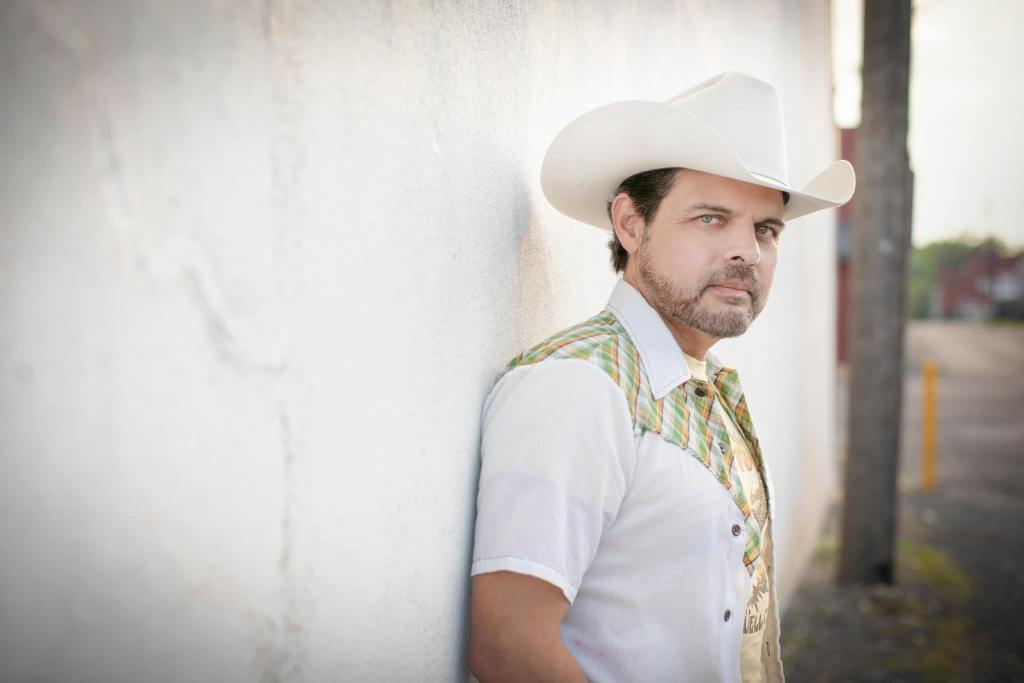
While he was at A&M, Trevino began gravitating towards being on stage as well.
“At first, it was a way to make a little bit of money on the side. I was playing with one of my next door roommates. He was a bass player, so we’d drive back to Austin and play with his band,” says Trevino. “After my sophomore year, I stayed home and started playing restaurants. I didn’t go back because I wanted to make a demo and put something together to shop. I saved up my money and put a demo tape together in 1991. We recorded ‘Jealous Heart’ by Johnny Rodriguez, I wrote a song called ‘San Antonio Rose to You,’ and we included four more songs.”
Thanks to a stroke of luck, those restaurant gigs got his demo in the hands of a major player in the music industry.
“In 1992, there was a flood in Austin, Texas. There was a guy from Boston, Paul Jarosik, who was in the A&R division of Sony Records, vacationing in Lago Vista,” says Trevino. “Back in the day, I played at a club called The Thirsty Turtle. It was a tiny place with no ventilation. Paul didn’t have a place to eat because of the floods, and he went in there and started talking to the owners. They said that he should listen to a guy named Rick Trevino. He flew back to Boston, called me and said ‘I hear I have to listen to you.’ I sent him my demo, and he sent it to the head of A&R at Sony Records.”
Everyone liked what they heard, and soon, Trevino signed a record deal with Sony/Columbia Records.
“The dream of being a country music singer and recording in Nashville on one of the major labels wasn’t something I was even thinking about ten months before it happened,” says Trevino. “Paul accidentally walked into The Thirsty Turtle. My demo tape made its way to (producer) Steve Buckingham’s desk. Who knows where I’d be if that didn’t happen. It sounds like divine intervention.”
Soon, Trevino was Nashville bound, but not without a slight hiccup.
“I had only taken one flight in my life before that trip, and I must’ve been seven years-old. This time, it was Memorial Day weekend. Being inexperienced flyers, my parents got me to the airport about 30 minutes before the flight was supposed to take off, so of course, I missed the flight,” Trevino says with a laugh. “I freaked out and called Steve. I thought I blew my opportunity. Steve laughed and said not to worry about it, to get on the next flight and that he’d pick me up. When I got to Nashville, we had song plugger meetings and listened to music. It was unbelievable.”
In 1993, Trevino entered the recording studio, and by late-summer, the label released Dos Mundos, a largely Spanish-language album, that Trevino feared would confuse the country music world.
“From a business standpoint, Freddy Fender and Johnny Rodriguez were the two Mexican-Americans to make it in country music, and there hadn’t been one since. My demo tape had five country songs, and the sixth song was ‘Jealous Heart,’ which was bilingual, because we did Johnny Rodriguez’s version,” says Trevino. “The record company and management were saying they wanted to do some songs in Spanish. Sony Discos, their Tejano label, wanted to release the Spanish album first, and then a few months later, release my album and single on Sony Nashville. I didn’t like the idea, because I wanted the first thing the public heard to be a straight country record. My biggest concern, being a 21 year-old artist, was confusing people into thinking I was a Tejano singer crossing into country. I couldn’t really raise a big stink because I didn’t have much clout. In the end, it didn’t really have a bad effect.”
To their word, five months later, Sony released Trevino’s debut country album, which, along with Dos Mundos, featured some of the greatest studio musicians Nashville had to offer.
“Being in the studio was overwhelming. Having those guys in the studio and Steve Buckingham producing was a dream come true,” says Trevino. “The first time we tracked, it was on Music Row at Nightingale Studio. We tracked ‘Just Enough Rope’ and an old Bill Anderson song called ‘Walk Out Backwards.’ I don’t know if the musicians could tell I was nervous, but they made it so easy. They kept it light, and we joked around the whole time.”
Trevino’s dreams kept coming true when his debut single, “Just Enough Rope,” began getting played on country radio.
“When you put in all the work and hear your song on the radio for the first time, it’s a great, great feeling. I couldn’t believe it was my song on the radio,” says Trevino. “The first week, my manager sent me a list of all of the stations that added it around the country. It was surreal. Someone from Austin, Texas was getting played in Wisconsin, New York and Los Angeles. I’ll never forget it.”
The label followed with, “She Can’t Say I Didn’t Cry,” which nearly landed in the hands of another 90s country powerhouse group.
“’She Can’t Say I Didn’t Cry’ was the song that almost wasn’t,” says Trevino. “We had put it on hold, and there was a big mix up where the publisher got upset and thought we were taking the song away from MCA Records and McBride & the Ride. Steve said we’d gotten the song pitched to us too, but said he didn’t want to be a part of it, and let them have the song. About six months later, we went back to track again, and the song came back, so we tracked it.”
That stroke of luck earned Trevino his first number one single at country radio.
“I was playing in Lancaster, California with Hank Williams Jr. and Trisha Yearwood. I was the opening act, so I had the first 30 minutes of the show. My band was already at the gig, so I was in my hotel room by myself. I called the record promotion staff, and they had me on speakerphone when they answered. Instead of the head of A&R answering, all you could hear was what sounded like a party. Twenty people were screaming and hollering. I was jumping up and down on my bed, all by myself. It was like winning the World Series, but you had to do it yourself in a hotel room [laughs].”
After one more single, “Doctor Time,” also entered the top five, Trevino moved on to Looking for the Light, which featured “Bobbie Ann Mason,” a song he deems crucial in his career.
“We’d been playing ‘Bobbie Ann Mason’ live before the first album, and I remember wanting it on the first record. For whatever reason, the record company didn’t want it on the first one, so we put it on the second record,” says Trevino. “It got into the top 10 on Billboard, and it saved that whole record. The song ‘Looking for the Light’ was around a top 40 record. I don’t know where I’d be without ‘Bobbie Ann Mason.’”
Trevino’s chart success picked up considerably with his third album, Learning as You Go, which saw its title track land at number two before “Running Out of Reasons to Run” earned him his second number one single.
“1996 was a wild, roller coaster year! My grandmom passed away on May 11, my wife graduated from college on May 14, we got married on May 25, and the album came out June 25,” says Trevino. “Everything was rolling. It was an exciting time.”
After the success of Learning as You Go, though, the wheels came off the tracks momentarily, as Sony planned to shelve his follow-up album, and after the release of one single, “Only Lonely Me,” Trevino asked to be released from his record deal.
“It was heartbreaking and frustrating. The business was changing, I was changing and the record label was changing. It was all happening at once, and it was time to regroup,” says Trevino. “I was at a point where, creatively, I wanted to move in a different direction. It was the beginning of a creative independence. It was a little risky and stressful, but I was looking forward to hitting my stride creatively.”
Hitting that stride included joining supergroup Los Super Seven, which at various times, featured Freddy Fender, Raul Malo of the Mavericks, several members of Los Lobos and more. The group’s debut, self-titled album earned Best Mexican/Mexican-American album at the 1999 Grammy Awards.
“I was a little hesitant to join at first, because they started naming everyone who was going to be involved,” says Trevino. “They sent me some songs, and several of them were songs that my dad used to play around the house. When I was on the train with Sony, you would put out three or four singles, and then it was on to the next record. This was different; it was a slower-paced, creative project. It opened my eyes and showed me that I could do things a little differently.”
Soon, Trevino’s eyes were opened to a new record label as well.
“We did a showcase in Austin, and got an offer from RCA Records for a development deal. I wasn’t looking for that; I was looking for an album deal, so I proposed doing the same showcase in Nashville, and they’d get first right of refusal,” says Trevino. “We did the showcase in Nashville, and RCA passed, but Paul Worley signed me to Warner Brothers. I was the first act he signed.”
For the first time in his career, Trevino had a hand in writing every song on his first album for Warner Brothers, In My Dreams, save for a cover of Bryan Adams’ “Have You Ever Really Loved a Woman?”
“I loved the friendship and comradery on that record,” says Trevino. “It was a different experience from flying in, listening to song pluggers, going in and cutting the songs. We would write the songs, and then go in and do the pre-production right there. Sometimes, we’d write all day, and (producer) Raul Malo would said, ‘Hey, I’m tired of this shit, let’s drive to Atlanta and catch a Braves game,’ and we’d take off driving! It was all really satisfying, joyful and fun.”
One more album on the label, Whole Town Blue, followed eight years later before Trevino decided to set off independently with the single “Cowboys Like Me.”
“It got frustrating; it was eight years between albums, so it became a little bit of a grind. I knew I had to re-think things,” says Trevino. “The first thing I did was pick up my guitar and try to write a song. That was my first attempt at doing it all myself. I wrote about 15 verses. I called my friend Alan Miller, and he helped get the song where it needed to be.”
In the nine years that have followed “Cowboys Like Me,” Trevino has released just a handful of singles, which he says is intentional.
“I get the chance to hold these new songs up to the same standards as I did when I walked into the studio for the first time with Sony,” says Trevino. “Raul Malo told me once that if you’re going to write a song, you have to nail it, so you can play it for the rest of your life. I won’t burden my band with a song that’s just okay. I’ll agonize over two chords for six months. That’s why I’m not making album after album. The hardest part for me is getting a song to the point where I consider it done.”
Last year, Trevino got to that point with “The Ride,” a sentimental song that had been on his mind for nearly a decade.
“In 2015, my son was graduating high school, and I started thinking about writing him a note,” says Trevino. “In 1989, my wife, Karla, and I were graduating high school, and went to see the movie Parenthood. There’s a scene in that movie where Steve Martin and his wife were having a fight. There was so much chaos in the house, and the mother-in-law, who was going through dementia, came in the middle of the fight and said ‘When I was 19, grandpa took me on a roller coaster. Up, down. Up, down. What a ride. It was interesting to me that a ride could make me so frightened, so scared, so sick, so excited and so thrilled, altogether. Some didn’t like it, they went on the merry-go-round. That just goes around. I liked the roller coaster.’ It’s comedic that the lady with dementia said the most profound thing in the movie.”
With that scene in his mind, he finished the song years later, this time, when his daughter, Presley, was graduating.
“I had a rough draft of the song, and I kept working on it. I didn’t get it exactly where I wanted it until Presley graduated two years ago,” says Trevino. “The song is exactly what I would tell my kids: ‘you’re in for the ride of your life. Don’t hide, just ride.’”
Presley not only inspired Trevino to finish the song, she put her personal touch on it as well, singing harmonies on the track.
“Presley heard the song on the radio last week. She’s never heard herself on the radio before. She did a great job,” says Trevino. “My son has a heavy rock band, and the lead singer, Ray, is like a son to us; he’s been Luke’s friend since grade school. Ray sang the other harmony part. It’s kind of like having brother and sister doing harmonies. It’s pretty cool.”
The song is made even more personal, still, with a music video that features numerous family memories.
“There’s a lot of personal stuff in there,” says Trevino. “There’s a scene where my wife was going through metastatic breast cancer five or six years ago. There’s a picture of my daughter, Olivia, the day before her open heart surgery in 2001. There’s a picture at the end of my son hunting with our dog, Gus, that has passed away. There’s pictures of Presley in there; we’re all in it. I love how it came out. It’s the ride of my life.”
And luckily, even three decades later, Trevino is still enjoying his time on that ride.
“The fans on the road are singing along to the old stuff like ‘Bobbie Ann Mason’ and ‘Running Out of Reasons to Run,’ and then they’re singing songs like ‘Better in Texas’ too. Some of the new songs are slowly having a grassroots growth, and I really get a kick out of that,” says Trevino. “Every show, especially since the 30-year anniversary of my first single, I make it a point to thank the fans for three decades. I feel very blessed.”
 Pro Country
Leave a comment