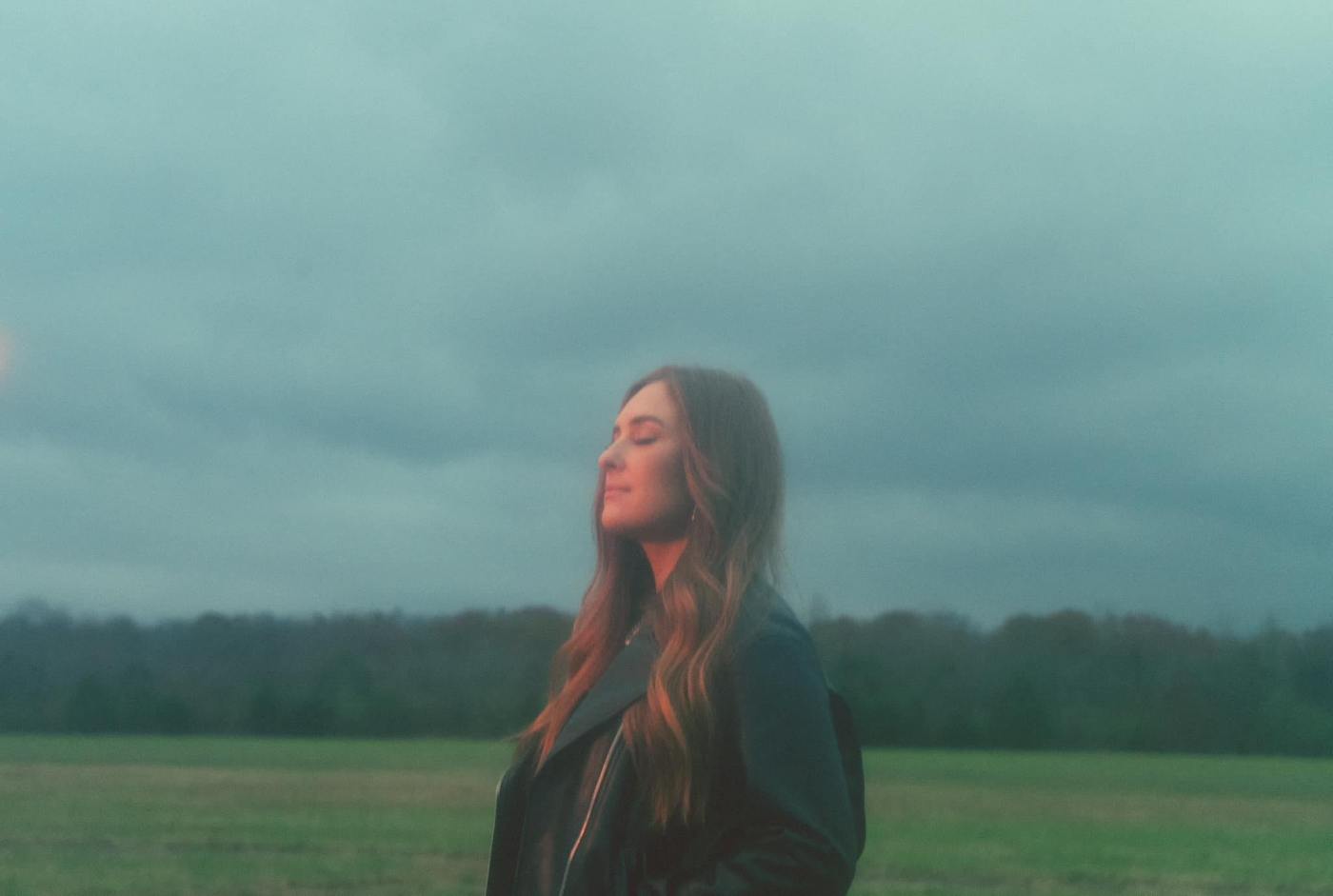
Nearly two months ago to the day as I write this, I found myself at The Listening Room in Nashville for a writers’ round called Song Suffragettes. I was flying back to New Jersey the following morning after spending the week covering CMA Fest, and wanted to see one last show before heading back to eastern time.
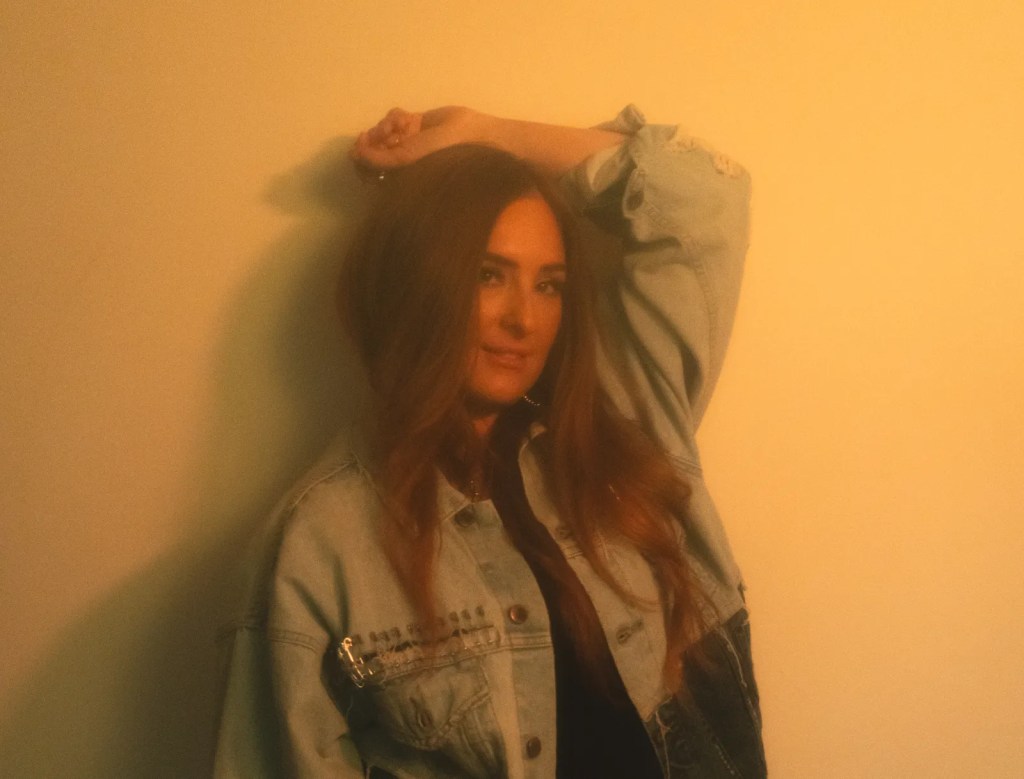
I’d heard Kayley Bishop’s name, but had never had a chance to listen to her music. Over the course of a handful of songs she performed over the next few hours, I was hooked. She had an Aretha Franklin-esque range with a little extra Janis Joplin snarl. She performed an original, “Hold On Honey,” that literally felt like she took the audience to church. I felt everything she sang.
The next morning, sitting in the Nashville airport, I listened to her latest album, Little Dove, and was taken on a journey through diagnosing problems in a relationship, the breaking point, and finally, finding love and redemption in God.
Soon after our plane touched down in Philadelphia, I reached out to Kayley for an interview. She was en route to Japan the following morning to perform at the World Expo. With over half a day of time difference between us, we connected for this chat about her journey from musical dreams to musical theater. From The Voice to finding her voice in Nashville. And from artist to podcaster and beyond.
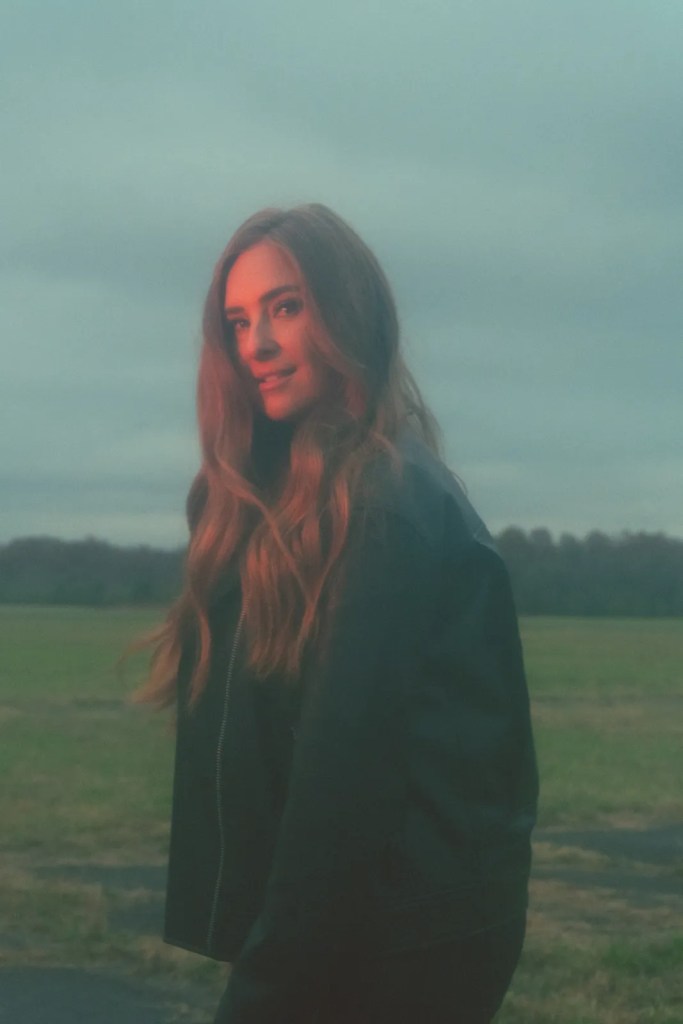
Pro Country: In previous interviews, you’ve listed influences ranging from Dolly Parton to Allison Krauss to Bob Seger and Stevie Nicks and Aretha Franklin and beyond. What was it about those kinds of artists that you were connecting with musically in your impressionable years?
Kayley Bishop: I grew up listening to country music. I was blasting Martina McBride and The Dixie Chicks. In high school, it was Alison Krauss. What drew me to Alison, specifically, was the musicianship and her vocal quality. It’s unmatched. I always had an affinity for bluegrass, and when I first moved to Nashville, I carried a lot of that instrumentation into my music. Since then, I’ve departed from that as I’ve realized my sound was a little bit more soulful.
When I went to college in Boston, I was studying musical theater. I started getting more involved with jazz and the performance and showmanship of storytelling, which, in turn, had a big impact on my songwriting. Now, I’m telling stories from the stage that can paint pictures for people.
Out of college, I found a love for Fleetwood Mac as I was playing corporate events and private parties. I fell in love with electric sounds. Everything has come together throughout my life of music to create an anthemic, soulful storytelling component to my sound.
PC: You’ve also said in previous interviews that you couldn’t pinpoint a moment where you knew you wanted to pursue music, because it has been a dream for so long. When did you realize that you actually could pursue music and that it was feasible?
KB: I don’t think I ever questioned if it was a feasible opportunity. I knew it was a calling in my life. I don’t remember a time in my life where I didn’t know that I wanted to sing for the rest of my life. I mean, I’m talking like two years-old; my earliest memories.
I always say it was written in my DNA, because that’s what it felt like for me. And that’s God too. He gives us all gifts and a purpose for our lives, and it’s up to us to walk in it. For me, I’ve always known that this was mine. It’s shifted and it’s taken new shapes, but it’s always been very intrinsically music.
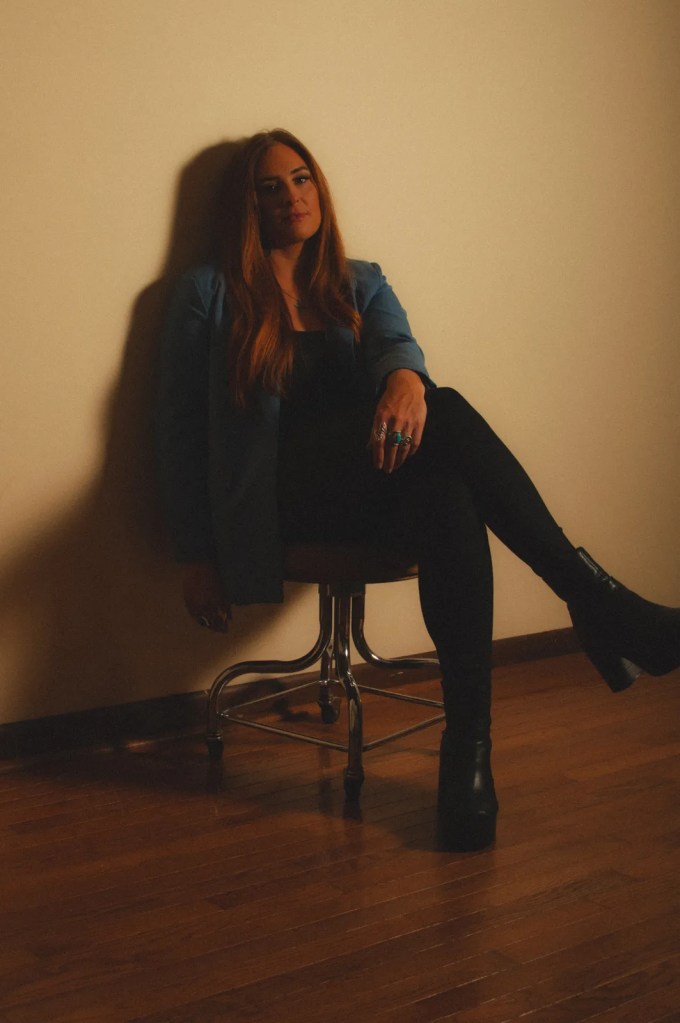
PC: You began musical theater in high school before continuing on that path in college in Boston. During those years, how important was that stage experience for you, and what did you enjoy about that craft?
KB: It was definitely important to my development. It was a conservatory of music, so it was a concentrated education on performance in theater. Once I got to senior year, I realized that I wanted to be myself on stage instead of a character, and I wanted to tell my own stories through my own songs, but what I did learn while I was studying and performing was how to develop a story. There’s a lot of work that goes into preparing to play a character on stage: what’s the background that maybe the audience doesn’t know, and how is that going to inform how I play this character?
I never thought it was going to help with songwriting. I didn’t even know that I was going to become a songwriter when I first entered college. But senior year when I started writing songs, I learned that the character development was super important to the perspective of who’s telling the story, and that has bled into how I write songs. Even if I’m not telling my story in a song, I have to find out how to do it effectively and make a story my own so I can make people feel something. I learned a lot about how to do that effectively in school.
PC: What was it about that time that made you want to start writing your own songs?
KB: I think it was stewarding the gift. When God gives you a gift, it’s not perfect, you have to develop it. And part of being given the gift is figuring out what you are gonna do with it. He can’t do that for you; you have to do that yourself. I knew that if I was going to sing for the rest of my life, I needed to be able to write songs. I needed to be able to play an instrument. It was part of me developing and furthering the skill.
When I started, it was awful. I couldn’t write a song to save my life, but I had the desire and some simple ideas, and I was just learning how to walk. And somehow, it was enough to get me into the next room, which got me into the next room. And there were rooms that I didn’t deserve to be in, but by the grace of God, I got in them, and little by little, that’s led me to where I am now.
PC: You moved to Nashville in 2013 to further your musical dreams. What kind of adjustment and learning curve comes with moving to a city with so much talent and industry happening?
KB: It’s a total onslaught of every feeling you can have. I just had to start small. Small beginnings are essential. My small beginning in Nashville was learning how to make an income through music, which I started doing that pretty quickly. It wasn’t a lot of money, but I had partnered up with a producer and I was doing some demo vocals in town.
Next, I partnered with a gentleman that was starting a corporate event band, so that allowed me to play live. Little by little, just through playing music live, I started to develop the skill.
I was leaving the affectation of my musical theater voice behind, because when you’re training in a musical theater program, you start to sound a little musical theater-y. I had that in my voice, so I began finding a voice that was my own, and that led me into new opportunities. I started playing on Broadway in Nashville in 2017, and I started getting strong on guitar by doing that. I did a lot of shows afraid, and learned that fear is a liar in the process. Fear is always gonna keep you from excelling and getting to the next level. I just kicked it in the face and said I wasn’t going to be afraid. And you have to do that over and over again, and you grow. You grow because you get out of your comfort zone. I lived to tell the tale.
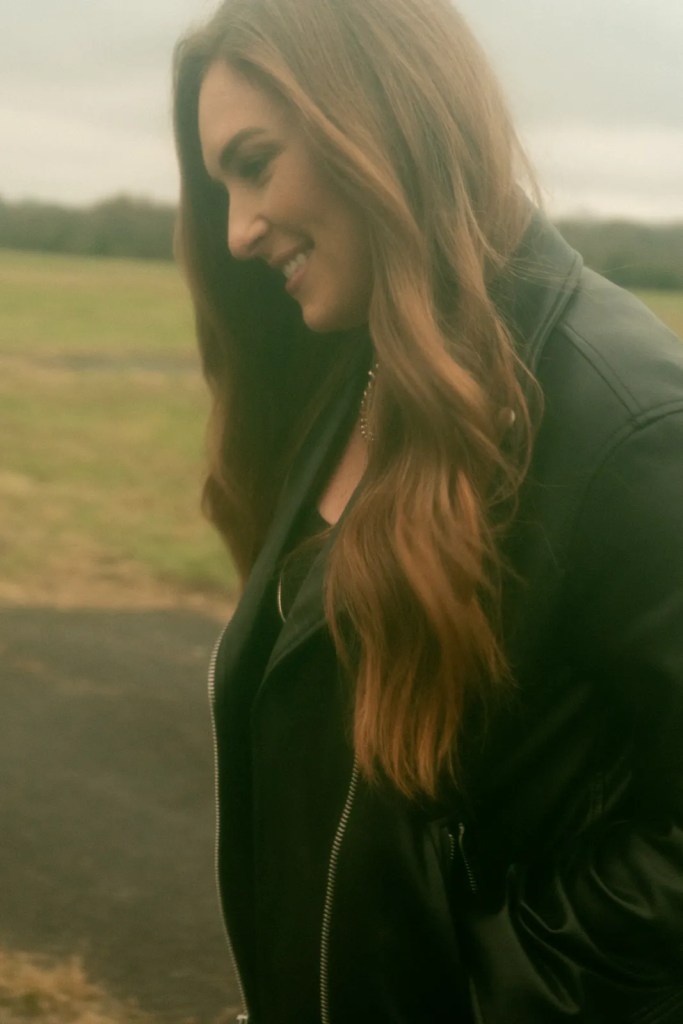
PC: After five years in Nashville, you were featured on NBC’s The Voice in 2018. Can you talk about how your audition came to be and what it was like to be a part of a competition like that?
KB: I really believe in the Lord, what He does and how He moves. He puts you in rooms, and you’re either ready for them or you’re not. I was scouted in downtown Nashville as I was playing. Their person said to give them a call, and that led me to a private audition, which took me straight to the producers. I felt the favor of God on my life. I knew it was time to take that opportunity. I did the blind audition and got on Blake’s team. I remember going in for my battle round, and preparing for that, I felt the favor of God leave me. I knew I was going home. And sure enough, I did. I had to grieve the end of that, because most of 2018 was spent preparing for The Voice. That was my environment, and now, I was out of my environment. But my confidence had really grown. I had left negative self-talk behind, which I needed to do in order to make friends in the music industry. I wasn’t comparing myself to other people anymore. I was focusing on what I could do to grow.
PC: When your time on The Voice came to an end, you received plenty of compliments from the coaches and advisors on the show. As an artist, what do kind words from people like that mean to you and do for your confidence moving forward?
KB: The person who had the greatest impact during my time at The Voice was actually Keith Urban, who wasn’t a coach. Because he wasn’t part of the franchise and was there as a guest, he took the opportunity really intentionally and gave me feedback that made me feel seen and appreciated for what I had to offer. His feedback meant the most.
PC: You began releasing music in 2018, and in 2022, “Rewrite Your Story,” a collaboration with Song House, was released. In the three years since, the song has been listened to over one million times across platforms. Can you talk about how that collaboration came to be and what it has been like to see a song that you were a part of have the life that “Rewrite Your Story” has had?
KB: It was the Lord. I had been invited to go to Song House prior, and I just kind of blew it off. I didn’t really know what it was. I ran into Tyler Ward, who started Song House, at an event. We ended up talking, and he mentioned he ran Song House. He told me they had an event the next day and that I should come. I ended up getting invited back, and the second time was when we wrote “Rewrite Your Story.”
There was a woman that showed up to the session that day who was involved in a sex trafficking ring, and she had developed a nonprofit that was helping people that were helping sex traffickers get out. The odd thing is that I had run into her at church a month before. I was serving coffee, and she had come up, and then a month later, here I am looking at her.
The theme of that day at Song House was to write a theme song for her. That morning, I had gotten brunch with a friend who had a history of sexual abuse, and she was telling me her testimony of where she was with the Lord at that time in her life. You establish a value about who you are. When bad things happen to you, you start to think that you are bad. The abuse and learning about that that morning allowed the lyric to come forward that afternoon. Jesus said, “you are worthy enough that I will allow you to rewrite your story. In fact, I will go further and I will help you rewrite your story.” You do not have to be what your past says you are, whether you’re the perpetrator or you’re the victim. When people listen to that song, they may not hear the faith element, but that totally came from a place of Jesus. He was all over that song.
PC: In 2022, your song, “Empty Parts,” went viral on TikTok a handful of times, and was used as a first dance song. How special was the journey of “Empty Parts” and the way you saw it connect with people?
KB: That one was written for a mother figure in my life who has 11 children, and the father was not in their lives; He chose a life of alcoholism. Her first son was getting married, and as they were preparing for the wedding, she asked me to write a song for their first dance. That’s a tall order. She said something to me, which became the hook of the song, “I just pray that my mother’s heart can spill over into the empty parts.” I knew that was the song. I went to work writing it with a friend of mine. The video of me playing it for her went viral. After that, I knew there were women that needed that song. And the crazy thing is that it wasn’t just the single moms that needed that song. The amount of feedback I’ve gotten from men who were raised by single mothers was astounding.
PC: You released “Hold On Honey” in March of 2024, which was the first taste of your album, Little Dove. That is a song you were commissioned to write about a message you would give yourself between the ages of 19 and 23, which were pivotal years in your life. Did the song and the way it came together almost feel like divine intervention?
KB: 100%. It was from Tyler Ward from Song House. I think he knew that I was divorced, but he didn’t know the details that I met my husband at 19 and married him at 23. That’s truly the Lord saying, “are you gonna write this song today?” Furthermore, Song House is all about collaboration. We would go off into rooms and write with two or three different people, but that day, he gave me a specific prompt for me alone; he wanted me to write it by myself. And that wasn’t common. For me to go out on that stoop by myself and write that song in 30 minutes, that was just totally from the Lord. There was no way otherwise.
PC: You’ve said that there hasn’t been a time that you’ve performed “Hold On Honey” where you haven’t had someone in the crowd be moved and that you’ve heard several stories of how the song has touched people. As a songwriter, what kind of compliment is that for you?
KB: It means the world to me. I was able to make something that moved people. The pride that I feel in having written that song was that I wrote it with God, because if anybody feels anything transformational or comforting from that song, it’s because He anointed it. He was in it. God was my co-collaborator on that song. I don’t think, in my humanity, I can create things that can be transformative to that degree on my own. I’m too human, I’m too flawed, but God is so good.
PC: “Seven” and “Wasted Wedding Gown” are two of the biggest heartbreakers on Little Dove. Are songs like that easy or cathartic to write as you’re going through those moments, or are they songs where you hang on every line and are a struggle to finish?
KB: Writing “Seven” was an out-of-body experience. I walked into the room with Autumn McEntire, and it was our first time writing together. I had the idea for about a year and a half or so. I knew the song couldn’t be written with just anyone; I couldn’t trust just anybody with this song. As I was telling the story, she was just typing it out, and that song wrote itself. I talked, she typed, and there it was.
With “Wasted Wedding Gown,” the creation of that song was really peculiar, because I started writing it in 2019 before I was divorced; before I even thought I was going to be divorced. It was foreshadowing my life. It was eerie. I ended up coming back to the song after my divorce with another songwriter, revisiting the lyric, knowing what the story was now and how to write it effectively.
PC: We’ve heard you sing and mention “Seven” and “Wasted Wedding Gown” on podcasts as early as 2021, three years before they were released into the world. What emotions came with finally releasing them and giving that glimpse into something so personal?
KB: It’s funny, I live the experiences, and then write the song. “Wasted Wedding Gown” was exception, but by the time I released the songs, I was so ready for them to be done. I had been playing them out for a long time. People had fallen in love with them. I had gone through the rollercoaster of emotions. I’d done a lot of healing with the Lord. It was an old story to me by the time I released them, and I just wanted to move on. But at the same time, it’s a new story to people that are hearing the songs for the first time, and I have to remember that and honor that.
PC: Though it’s a deeply personal project, what do you hope listeners take away from Little Dove after listening all the way through?
KB: I just want them to get a touch of heaven. I hope they listen to the lyrics and find truth to the point that they shift how they behave. I want them to be transformed. That’s the major goal, but the best transformation is with God, so my hope is that they just get a touch of heaven.
PC: Little Dove will be one year-old in October. With time having passed since its release, what does that album still mean to you and how do you look back on those songs?
KB: I am proud of it in a lot of ways. It’s scary to tell vulnerable stories, and I’m proud that I did it. I’m proud of the musicians that played on it. I’m proud of the sound. It took a lot of development in my identity to come to that place musically. I think Little Dove will always be something I’m very proud of. It took a lot of growth to get to it and to get through it.
PC: When we saw you perform at The Listening Room in June, you mentioned that you’re in a season of writing faith-based songs, and even performed a fantastic one, “Forty One,” that night. Though you’ve always been strong in your faith, how much have you enjoyed leaning even further into your faith with your music?
KB: I’ve really enjoyed it. Tom Douglas said it best, “I may not know the best stories, but I know my stories best.” I really try and walk in that, because it’s true. The encounters that I have with God are the stories I know. Something shifted in me early 2025 where I realized I needed to be telling people about God. The most important thing you can do on this Earth is get to know who Jesus is. If I’m given a gift from God, why would I not use it to encourage people to know Him?
PC: You recently launched a podcast, Bible Bish. How long had the podcast been in the works, and how much have you enjoyed hearing people’s reactions now that it’s available?
KB: Officially, it began in November. Too many people had told me that I needed a podcast. Walking into 2025, I had the burden on me to walk slower and allow for God to interrupt me. In doing that, I realized I was missing the moves of God. God got me alone and said, “we’re doing the podcast now.” My prayer all of last year was asking God to build the house. There’s a verse in Psalms that says “Unless the Lord builds the house, the builders labor in vain.” Therefore, He had to build the house. Sure enough, He did. He brought the finances, the team, the support and the studio to me. We started filming, and then it was time to start developing the editing and learning how to do it. Building the universe has taken a lot of time and energy, and I’ve had to learn how to do it all from scratch. A lot of people have reached out with positive feedback and thanked me for having it available. It doesn’t have huge numbers, but I’m not going to discredit small beginnings. I’m going to do what God has told me to do and be okay with the process.
PC: You’ve been in Nashville for 12 years. What has been the biggest way you’ve grown over the last dozen years in Music City?
KB: It will be 12 years officially on December 3rd. It’s crazy, because for seven of those years, there wasn’t a lot of development, because I was in a very destructive marriage. Who you’re aligned with will directly affect your progress, growth and development. I was stagnant for a long time, but when I left that marriage, God said to me “I’m going to redeem the years the locusts have eaten.” And He really has. So over the last five years, there’s been exponential growth. Not just creatively, but spiritually, too, and there’s been emotional development and identity development. It’s not because I’m good or special, it’s only because I said yes to God. I said yes every time He asked me to do something. I said yes when He asked me to go to hard places and confess things I didn’t want to confess. All He can do I work in my yes. That’s why I’ve developed so much in the last five years.
PC: You have Bible Bish rolling now. Along with that, what do you have planned musically and professionally in 2025 and going into 2026?
KB: In writing these faith-based songs, they’re very transformative. I know that they’re going to have a home, whether they’re with me or another artist. I’m holding them loosely, because more than ever, I feel that the message is more important than the messenger. If there’s a messenger for these songs that has a wider footprint, I want them to have them. I don’t know what that looks like; if that means pursuing a publishing deal or a collaboration in the faith music realm. It’s totally up to God. I’m going to continue to steward and multiply the gift in the ways that I can. I do have a worship record that I recorded, I just need to finance the mixing of it, and I have a producer lined up to do that. That, along with the podcast, are the premiere focuses I have. Beyond that, it’s up to the Lord. I don’t know what happens next.
PC: Is there anything you’d like to add?
KB: One thing I’ve learned in doing this is when you don’t see the algorithm and analytics in your favor, it doesn’t mean you’re doing something wrong. I’ve had so many days of defeat and thought, “man, I thought I had the talent and the songs, but yet, it doesn’t seem like I’m breaking out in the industry and having the success I want as a musician.” I know now that seeds are being planted, and that my success has to be seen through what God sees as success, and not through what man says. At the end of my life, I stand before Him. I want people to be encouraged that just because they may not see something on the outside, it doesn’t mean they’re not building and stewarding what they’ve been given.
 Pro Country