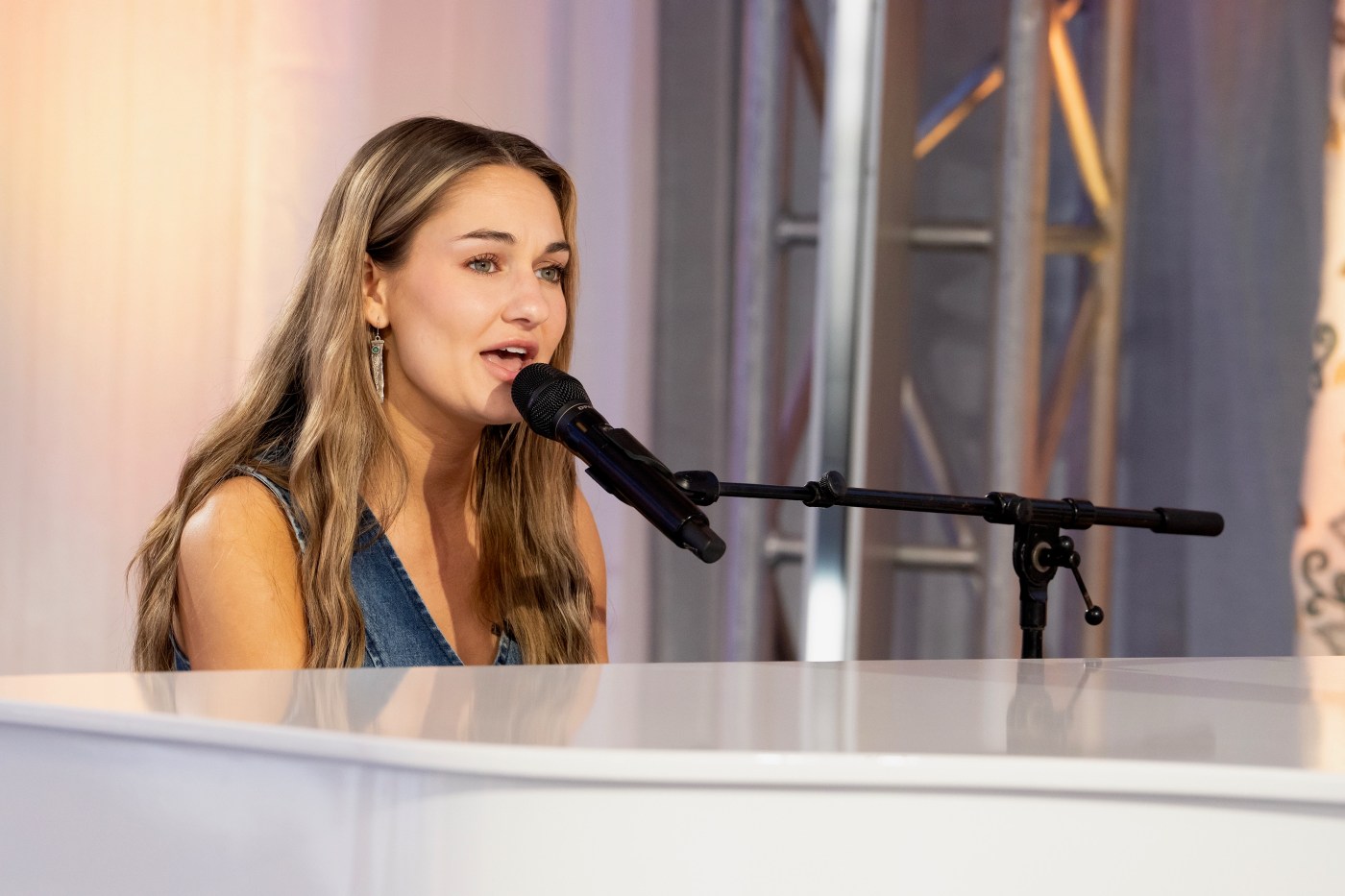
For a time, it seemed like life was trying to pull Nina Daig away from music. Bullies, and even an early vocal coach, ridiculed her so much to the point that in her late teens, she was ready to leave music behind.
Just a few years later, though, she started singing again for her soon-to-be husband, who encouraged her to share her gift. Soon, on a whim, she sent a video audition to American Idol, and she got through. She made her way in front of Lionel Ritchie, Carrie Underwood and Luke Bryan, wowing them, and hundreds of thousands of viewers, with a touching original about her brother, Joey.
Nearly a year removed from her audition’s air date, Daig has three single releases to her name (including her badass new effort, “Diamond Cowgirl”), confidence in her skills and a newfound sense of direction. We chatted with her about all of it and more!
Pro Country: You started singing to yourself when you were little. Who were some of the early artists you remember hearing, loving and singing along with?
Nina Daig: My parents had the idea that country music was more appropriate for kids [laughs]. My mom’s whole family was from eastern Tennessee, so we always had country radio on. At the same time, Taylor Swift was in her country era, and I idolized her as a kid.
PC: You’ve mentioned that you began writing songs in secret. How old were you when you started writing songs, and what was it about expressing yourself in that way that struck a chord with you?
ND: I was about 12. I taught myself how to play chords on piano from YouTube, which was enough to write songs. The love of music and the talent were always there. I had a hard time in school, so I listened to music to escape, which eventually transitioned into writing.
PC: You’ve said that insecurities lead you to believe that nobody wanted to hear you sing, and that for a long time, you didn’t perform in front of people. How long had you battled with those insecurities, and what did you do to combat them?
ND: I got bullied a lot in school. When I was 13 or 14, I started doing open mics, and that was known about in school and made fun of. I was also doing vocal lessons as well and getting negative feedback from my teachers. A lot happened that made me want to shut down, and by the time I was 18 or 19, I was completely done. I totally gave up on the idea of doing music and started working.
When I was 20, I met my husband, and I slowly started singing, just for him. He would push me every day to play gigs and sing for people, but the confidence wasn’t there. We were sitting on the couch watching American Idol, and when the credits were rolling, it said “could you be the next Idol? Send a video!” I sent in a video, never expecting anything, but I got an email back on my flip phone; I didn’t even have a smart phone at the time [laughs]. I saw “American Idol” pop up on the little screen, went home to my iPad, and the email said I’d been selected for a callback. I thought it was fake, but I still went on the Zoom, and everything took off from there.
PC: What did you sing on the video you originally sent in?
ND: I sent “Mama’s Don’t Let You Babies Grow Up to Be Cowboys”!
PC: Singing in front of Lionel Ritchie, Carrie Underwood and Luke Bryan was your first time singing in front of people in quite some time. What emotions were you feeling when you walked in the room and you saw them waiting to hear you sing?
ND: I was on autopilot. People say they leave their body under that kind of stress, and that was true for me. I felt like I was standing behind myself and watching it unfold in the third person. I definitely said a lot of things that I immediately regretted [laughs]. It was pure fight or flight. When I get like that, my voice isn’t there. Luckily, it was there just enough to get through the audition.
PC: You sang a very special song, “Average Joe,” that got you through to Hollywood week. What did it mean to you to perform that song and for you and your brother’s stories to be seen by so many people when your audition aired?
ND: As soon as I knew I’d be doing Idol, I showed them a few original songs, and they immediately decided “Average Joe” would be my audition song. At first, honestly, I was a little disappointed. With reality TV, it’s very much about the story, and I felt it would take away from me as a songwriter. As soon as it started happening and I started thinking about what it would mean for Joey and anybody with a disabled family member seeing it, I started getting excited about it. In the time since, people have contacted me that have the same story and have talked about how they needed to hear the song. It’s been really special.
PC: When did your audition take place? How hard was it to keep the secret that you’d auditioned and gotten through to Hollywood week?
ND: The audition happened in October of 2024, and I couldn’t tell anyone until the show aired in March. It was pretty hard to keep it a secret. People knew, though. I live in a very small area in Virginia, and my family owns one of the only sit-down restaurants, and I’m there full-time. People knew that I had auditioned, so when I was gone for a long time, they knew that’s where I was [laughs].
PC: Your time on American Idol ended just before reaching the top 24. As an artist so early in her journey, what did you take away from your time on the show?
ND: It was such a bizarre, foreign environment. It was so cutthroat and terrifying. I was dropped off in the deep end with no idea what I was doing. But doing it made me able to do everything that I’ve done since then.
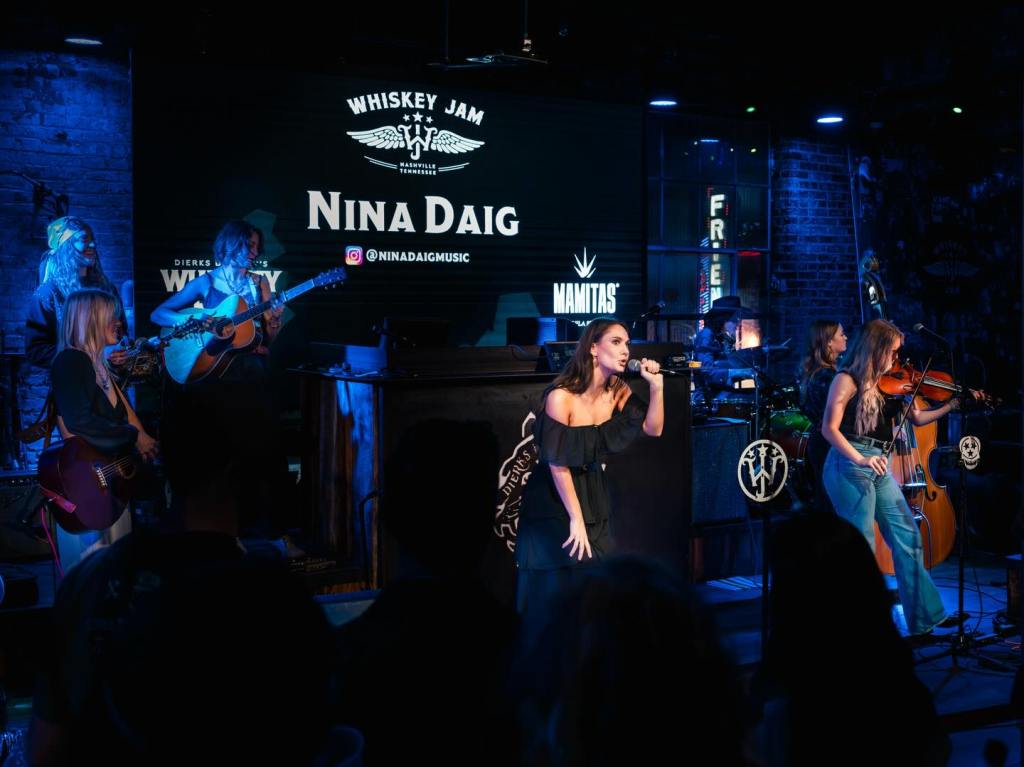
PC: You mentioned on social media that your first “real show” in Nashville was a Whiskey Jam about a year ago. What was it like for you to step on stage and play such an esteemed show so early in your artistic journey?
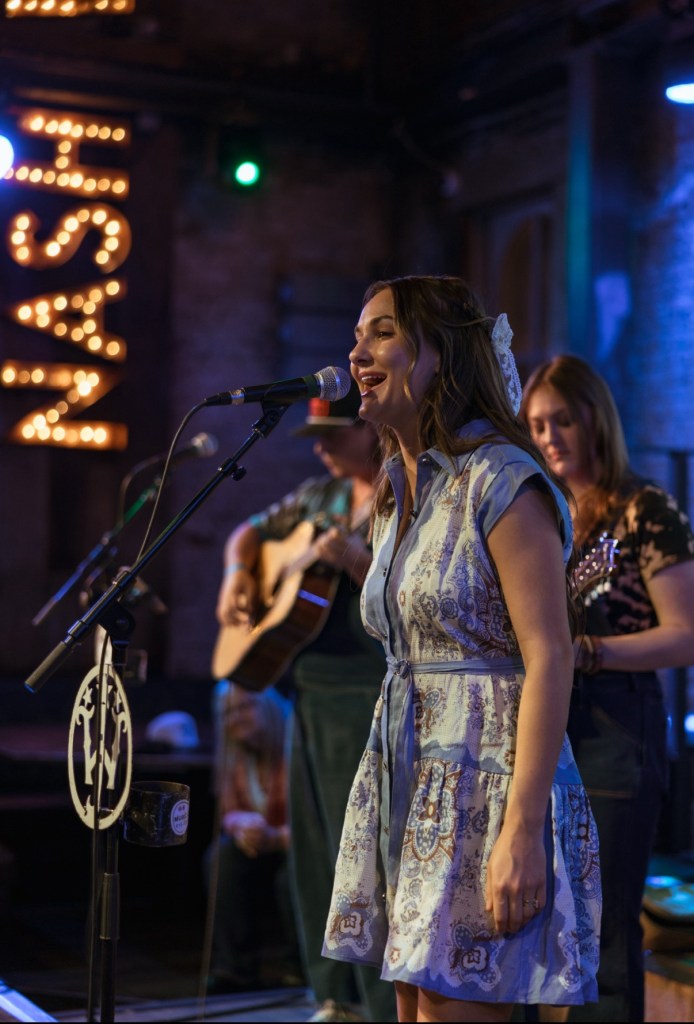
ND: Do you want to know what’s hilarious about it? I had no idea what it was [laughs]. I had just gotten on social media, and I knew nothing about the Nashville scene. After Idol, I suddenly had a bunch of artist friends that are way more successful than me. They’re really great people, and my friend, Evan Coyote, got me on Whiskey Jam.
PC: You released your debut single, “Milk Carton Girl,” nearly a year ago. What emotions were you feeling as you were preparing to release music into the world for the first time?
ND: I had no idea what to expect. There was a bit of a letdown, because I sang “Milk Carton Girl” on Idol, but it was never aired. It was supposed to air, but things changed with the storyline and production with me leaving. I hoping that I could release it right after. But I’m so happy that it’s out, because it’s one of my favorite things that I’ve ever written.
PC: You said on social media that you wrote “Milk Carton Girl” at night, on the piano and hoping your husband wouldn’t hear you singing. Can you talk about the journey the song has had now that it’s been heard by thousands of people?
ND: I wrote the song going into the whole Idol process and all of the fear that it was bringing up in me. I’m a well-adjusted, pretty secure, normal adult, but the thought of doing that ruined that idea of myself. I realized the confidence that I thought I had wasn’t there, and the last time I’d seen it on the scale that I needed it to try the whole experience was when I was a little girl. The journey from writing it to putting it out captured that fear. I love hearing it now that it’s out, though, because I’m a completely different person from when I wrote it, but it’s a perfect snapshot in time of me being honest.
PC: To that point, there’s a line in “Milk Carton Girl” that says “I’m shy, but I don’t wanna be.” Over the past year-plus of performing and releasing music, how do you feel that you’ve grown as an artist and in confidence?
ND: I still have so much to learn, but my confidence has grown so much. Part of that was Idol, but even after that with doing smaller shows, I was just as terrified doing those as I was doing Idol. I’m learning that full-on, artist/country singer may not be the lane for me. At the same time, though, it’s making me confident in the things that I know I’m good at.
PC: You released a studio version of “Average Joe” last August. Though it had the journey that it had on Idol, how special is it to have a recorded version of the song for yourself and your family? And though it’s a deeply personal story, what do you hope people take away from it?
ND: It’s super special to have it out. My brother, Joey, listens to it every day. Because it’s for him, even if nobody else listens to it, that’s enough for me.
What I want people to take away is that disabled individuals are absolutely perfect and meant to be just the way they are. That was my love letter to him, but I’m hoping anybody who hears it realizes that they’re perfect and that they deserved to be loved the way they are.
PC: You ended February with “Diamond Cowgirl,” a song you wrote with Malachi Mills. Can you take us in the room and talk about how the song came together?
ND: I wrote 80 to 90 percent of “Diamond Cowgirl” on my own. It was “finished,” but I knew it wasn’t totally finished. Malachi is half of The Band Loula, who are amazing. They’ve been friends for a few years; they even played my wedding.
We kept in contact, especially during and after Idol, because Malachi was on Idol in 2020. I consulted him a lot through the whole thing. I started showing him songs I liked and asked for his opinion on putting them out. “Diamond Cowgirl” was one of them. He said he loved it and that he had a few ideas. We re-envisioned it together on a FaceTime write. One of the next times I came to Town, we recorded it.
PC: “Diamond Cowgirl” has a badass groove that runs throughout. How much fun was it tapping into that sound in the studio and watching it come to life?
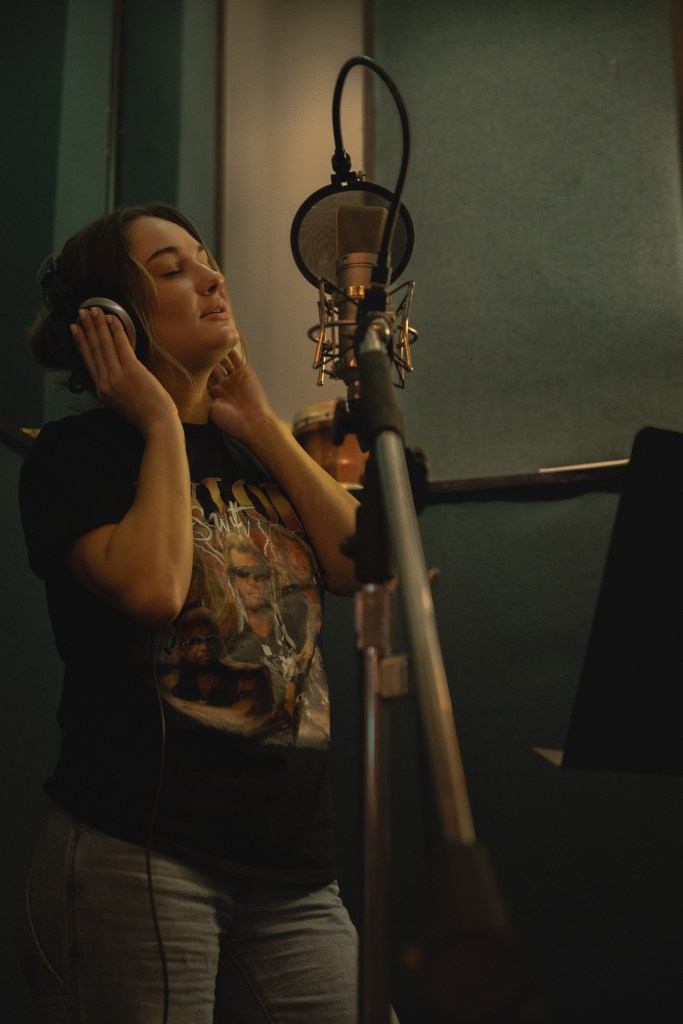
ND: It was really fun. Especially when you’re making music with your friends. Malachi, himself, is amazingly talented. He sang background vocals and played guitar. We had Gary Nichols, from the original SteelDrivers, on electric guitar. It was a super cool experience. When I’m around my talented friends, I feel like I’m in another world that I don’t deserve to be in [laughs].
PC: You’ve mentioned on social media that you’ve been in the studio as often as you can recording new music. What information, if any, can you give about what will follow “Diamond Cowgirl”? What can people expect to hear?
ND: In the last year, I recorded quite a bit, but I’ve also changed quite a bit. In the last year, I’ve completely given my heart to the Lord. A lot of the things that I recorded were very worldly and out of anger. I’m a full believer that Christians can write music about anything, but I feel very convicted about a lot of the songs that I’ve written. They’re great songs, but I’m going to revisit a lot of what I’ve recorded and re-write it. What I’m recording now is much more in the country-Christian lane.
PC: Along with that, what do you have planned for the rest of 2026?
ND: I’m going to keep writing whatever is on my heart. I think my best songs come from when I have an idea that I know needs to be a song. Any song that I’ve released or recorded so far is one where I have the idea, gone home to my piano and written them in about five minutes. Any time that happens, I’m going to record those songs, especially with the new lane that I’m in. I’m going to put out as much as I can.
 Pro Country
Leave a comment