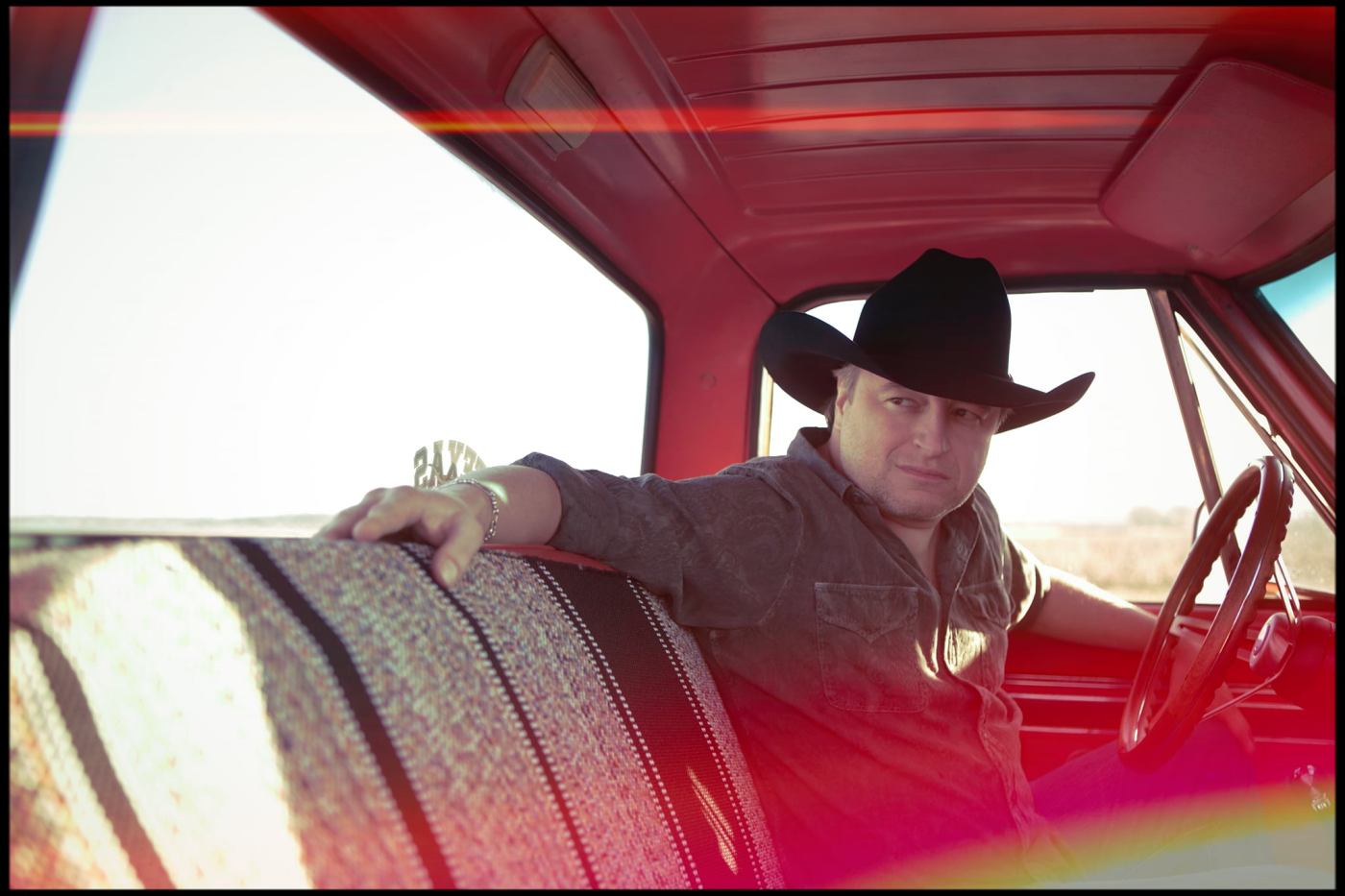
Though he was already making waves in his native Texas, Beaumont native Mark Chesnutt wasn’t introduced to the masses until July 16th of 1990. That introduction came in the form of his debut single, “Too Cold at Home,” a stone-cold, tear in your beer country song that set in motion a career that has cemented him as both a honky tonk legend and one of the signature acts of the 1990s.
Throughout that decade, Chesnutt compiled a staggering 14 chart-topping singles, scored a pair of CMA Awards, made friends with his musical heroes, and most importantly, laid a foundation that keeps him in the ears of country music fans old and new more than three decades later.
Before all of that, though, Chesnutt was an impressionable kid in Texas drawing influence from the music his family played around the house.
“Back when I was a kid, Mama and Daddy were always playing music in the house. We listened to more music than we watched TV. They had one of those big old stereos that looked like a coffin,” Chesnutt says with a laugh. “My brother would play Aerosmith, ZZ Top and Led Zeppelin. Mama would play Fats Domino and Elvis, and Daddy would play Hank Williams Sr., Merle Haggard and all the country stars of the day. I soaked all that in constantly.”
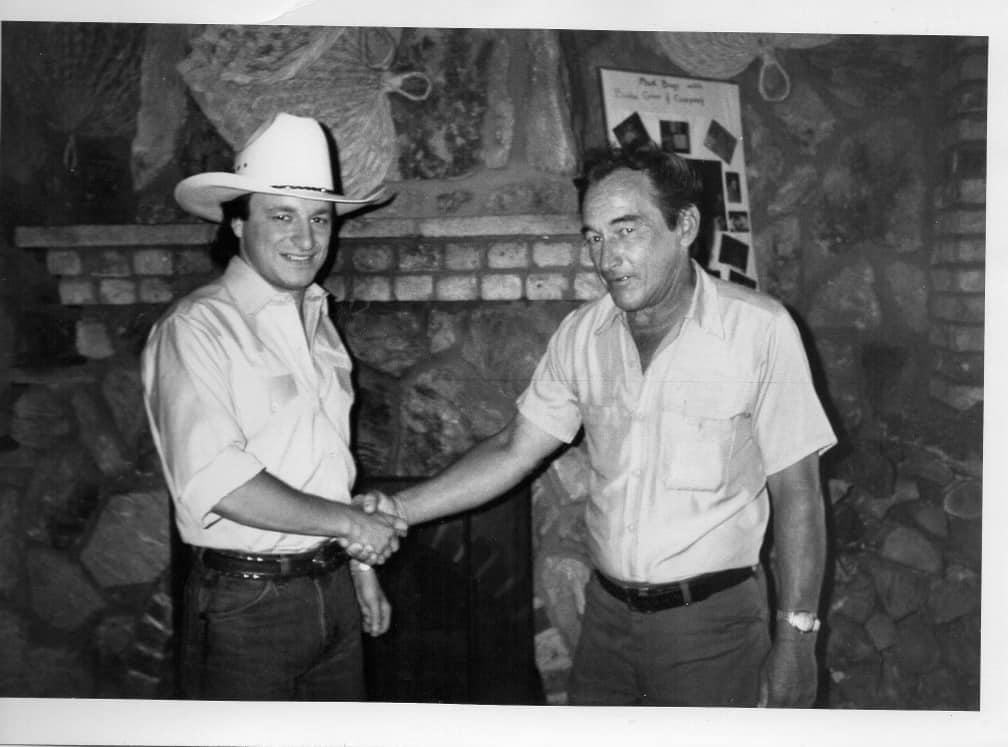
As his love of music progressed, Chesnutt found his way on stage playing drums and singing lead around Texas.
“I started playing drums when I was a little bitty kid. My Daddy started me out with a starter set, and when I was a teenager, I got more and more drums. Eventually, I had a giant kit. In the 70s, all the drum kits were huge. I was into KISS, so I had to have a great, big drum set like Peter Criss,” says Chesnutt. “I played in several little bands with buddies. I was the lead singer and the drummer. We played around Beaumont, and we ended up getting pretty popular.”
After cutting his teeth in those bands, Chesnutt decided to take up the guitar, which set him down a path towards being a full-time musician.
“One day, I decided to pick up the guitar. Daddy only knew three chords, so he taught me those, and I learned the rest from others,” says Chesnutt. “I started playing shows by myself with just a guitar, and I got pretty busy doing that. I eventually quit my day job at Montgomery Ward. I had a coworker tell me I should quit working at the stores to go after a singing career full-time. That day, I quit and never looked back.”
Instead, Chesnutt looked towards Music City; regularly taking trips to Nashville and making connections with artists and songwriters in the City, which eventually led him to two songs that would change his life just a few years later.
“My buddy and I would load up a truck and go to Nashville a couple times a year and stay for a few days. We made friends there and started singing in the honky tonks, where I met a lot of musicians and songwriters,” says Chesnutt. “One of the guys I met was Bobby Harden. He’d sing me stuff he’d written. One day, he told me ‘I’ve got a song for you. I wrote it 15-20 years ago, and I’ve pitched it to everybody. George Jones and everybody you can think of turned it down. I think you can sing this. You take this back to Texas and record it. It’ll break you into the business, I guarantee it.’ That song was ‘Too Cold at Home.’ Then he played me ‘Ol’ Country.’”
Following Harden’s advice, Chesnutt took the songs back to Texas and recorded them, which eventually landed at the desk of MCA Records, who signed Chesnutt to a record deal.
“I couldn’t believe nobody recorded those songs, they were great. I went to Houston and recorded them, and A.V. Middlestedt put them out on his label. I started getting played on local stations around Houston and Beaumont,” says Chesnutt. “Finally, I got noticed by a guy named Roger Corkill. He worked for MCA Records in Houston. He heard ‘Too Cold at Home’ and wanted to meet me. He brought that record and played it and ‘Ol’ Country’ for Tony Brown at MCA. He said ‘I want you to play this right now. I’m not leaving this here with you.’ Next thing you know, they offered me a record deal. I was floored.”
MCA Records put Chesnutt to work quickly, sending him into the studio to re-record “Too Cold at Home,” which became the title track for his debut, major label album.
“I was scared to death. All of the musicians were so talented, It was intimidating,” says Chesnutt. “I had 18 players on my session. I couldn’t believe the way they treated me; they treated me like I was already something. They made me feel right at home.”
Four months after recording “Too Cold at Home,” MCA Records released it as Chesnutt’s first single to country radio, which gave him the opportunity to hear himself on syndicated stations for the first time in his career.
“That was mind-blowing,” says Chesnutt. “I would be driving down the road, and they’d play that record. To hear myself singing on the radio floored me. It was an amazing feeling.”
After “Too Cold at Home” peaked at number three on Billboard’s Hot Country Songs chart, the album’s second single, “Brother Jukebox” shot Chesnutt to the top of the charts for two weeks in February of 1991, which allowed him the opportunity to spend time with his heroes and on country music’s most prestigious stage.
“I couldn’t believe it. I started hanging out with the big stars I grew up listening to. That was the coolest thing. I was hanging out with George Strait, George Jones, Merle Haggard, Waylon Jennings: all of them,” says Chesnutt. “I played the Opry for the first time, and they accepted me right in. They said I could play the Opry any time I was in town. And that’s what I did.”
By the time the final three singles from Too Cold at Home had run their course, Chesnutt had earned himself two more top five hits and another top ten, though he admits to being overwhelmed by the success and the influx of songs he was being pitched following that success.
“I didn’t handle the success very well. It was really tough. After a year or two, I thought ‘man, what the hell did I step in to?’ I had a lot of pressure on me to keep going,” says Chesnutt. “I was getting pitched songs by the biggest writers in town. My name was out there, and people knew what I did, so I was getting pitched songs by the biggest writers in the world. Those songs kept me going.”
Several of those songs landed on Chesnutt’s sophomore album, Longnecks & Short Stories. After the album’s first two singles, “Old Flames Have New Names” and “I’ll Think of Something” peaked at number five and number one, respectively, the album produced another top five hit, “Bubba Shot the Jukebox,” which has become one of his most signature songs.
“The first time they played that song for me, I was in a song meeting. At those meetings, they literally play you hundreds of songs, one after the other. It’s boring as hell,” Chesnutt says with a laugh. “98% of the songs weren’t for me. On that one, they said ‘you’ve gotta hear this. We’ve been playing this song for everybody, and they all laugh.’ The demo was really funny; it had Jew’s harp in it and all that stuff. When they played it for me, they were all laughing, but I heard a song. I was the first and only one to cut it.”
The hits kept flowing for Chesnutt as his third album, Almost Goodbye, spawned three consecutive number one singles out of the gate. And while his momentum was strong, the pressure he felt to maintain that success continued to mount.
“It was crazy. You can’t stop and rest on what you’ve done, you have to keep pushing it. In this business, you’re only as good as your last record. You get pressure from that. You get pressure from the radio play. It’s pretty mind-blowing,” says Chesnutt. “Once you have a hit, you’re already looking for new songs. Then you’re back in the studio. It’s never ending.”
With all of his chart success soon came industry recognition as well, as Chesnutt was awarded the Horizon Award at the 1993 CMA Awards, as well as sharing the Vocal Event of the Year award for his contribution on George Jones’ 1993 single “I Don’t Need Your Rockin’ Chair.”
“That part was great. My biggest deal was being accepted by my heroes,” says Chesnutt. “The awards were great and I enjoyed them, but the main thing was getting to be friends with people like Jones, Merle and Waylon. That was a big hoot.”
With his momentum continuing to build, Chesnutt embarked on his first headlining tour to coincide with the release of his 1994 album, What a Way to Live. Initially intimidated by the task, Chesnutt says he learned the ropes from years of studying his idols.
“I got to tour with Conway Twitty and George Jones a few years earlier, and it blew my mind that I was getting paid every night to sit on the side of the stage and watching those guys sing,” says Chesnutt. “Headlining scared me to death. I had people telling me what to do and how to act on stage, like I didn’t know any better. And I really didn’t, I had to learn over time. I really don’t think I was ready to be a headliner. The headlining job is serious, but I learned from watching my heroes.”
The hits kept rolling with two more album releases, 1995’s Wings and 1997’s Thank God For Believers, with a Greatest Hits album sandwiched between. But come 1998, Chesnutt was at an impasse with his record label, who were pushing him to record a cover of Aerosmith’s “I Don’t Want to Miss a Thing,” which he was hesitant to do before receiving encouragement from Waylon Jennings.
“My producer, Mark Wright, said we needed a big power ballad. He said music was changing, and we needed to cut it. I told him we couldn’t cut an Aerosmith song,” says Chesnutt. “I called Waylon and said they wanted me to cut a damn pop song. He asked if I wanted to do it, and I said I didn’t, but I didn’t think I’d have my record deal if I didn’t. In Nashville, if you piss somebody off and they call you hard to work with, you get pushed to the side. Waylon told me to stop listening to the Steven Tyler version of it. He said ‘You go in the studio and you sing the hell out of it. If it makes you feel better, I’ll come down there when you’re recording.’ And he did. He came down to the studio every day when we were cutting that song. I don’t think I could’ve done it without him.”
Though Chesnutt’s version topped the charts for two weeks, when Wright suggested recording another pop song for his next album, Lost in the Feeling, Chesnutt asked to be released from his record label deal.
“I don’t remember what song it was, but it was one of the groups at the time that was making all kinds of noise. The song wasn’t as strong as ‘I Don’t Want to Miss a Thing.’ I told them I wasn’t doing it again. I said ‘I’m a country singer, and that’s not country,’” says Chesnutt. “They were making changes at the label, and they weren’t pushing me like they were before. I cut some great songs that they wouldn’t release as singles. They wanted me to record songs that they had something to do with. I had to sit there and watch great songs sit on an album as album cuts. We got to the point where it was best if I just left, and I did.”
After a self-titled album was released on Columbia Records in 2002, Chesnutt admits the same issues arose, and he became jaded with the major label industry.
“The music business started turning into ‘hey, my friend wrote this, you need to cut it.’ That got me disappointed in the whole system,” says Chesnutt. “They signed me because they came to Beaumont and saw a guy singing real country music. After a few big hits, they wanted to change my direction, and I didn’t understand that.”
Instead, Chesnutt decided to stick to his guns, releasing several albums on independent labels throughout the 2000s and 2010s, culminating in the release of his newest full-length album, Tradition Lives, in 2016, which served as a flag-flying statement for traditional country music in the midst of the “bro-country” era.
“That album was great. I didn’t really care for the direction that country music was going. They kind of pushed all of us traditional guys out of the way to make room for the ‘bro-country’ guys,” says Chesnutt. “There’s still a lot of people that love our kind of music. People still want to hear songs like ‘Too Cold at Home’ or ‘Bubba Shot the Jukebox.’”
While Chesnutt continued to stay active on the road, he was forced to take time off in the early 2020s to recover from back surgery. Though he admits he’s still not back to full health, he is happy to be back on stage.
“That back surgery changed my life. I didn’t get the surgery done when I should’ve; I put it off for years. It got worse, and it got to the point where I wasn’t able to work,” says Chesnutt. “I’m not 100% where I was, but I’m doing good now. There’s certain things that are hard to do. I can’t pick up anything heavy, and being on a bus doesn’t help. But I’m doing a lot better than I was even this time a year ago.”
With a heavy slate of shows lined up ahead of him, Chesnutt plans to stay busy on the road. He also admits to being open to the potential of recording new music, though he would also feel comfortable resting on the legendary catalog he has spent three-plus decades building.
“I’m going to keep working as long as I can. To be honest, I would’ve hoped by this age, I would’ve been off the road,” Chesnutt says with a laugh. “Maybe someday I’ll get back in the studio and record. I don’t really need to, though. People from my time are getting discovered by a whole new audience. They’re coming to shows and they’re downloading the music. The people who have been with us for years are still here, and there’s new fans all the time discovering our music.”
As he approaches the 33rd anniversary of “Too Cold at Home” being released to radio, Chesnutt admits it’s those same fans that keep him inspired to stay on the road and bring his brand of country music all over the country.
“The fans keep me going. As long as they’re willing to come out and see us, we’ll be out there playing country music for them,” says Chesnutt. “I see little kids walking around with ‘Bubba Shot the Jukebox’ shirts. That makes you think you did something right. That’s why we keep doing what we’re doing.”
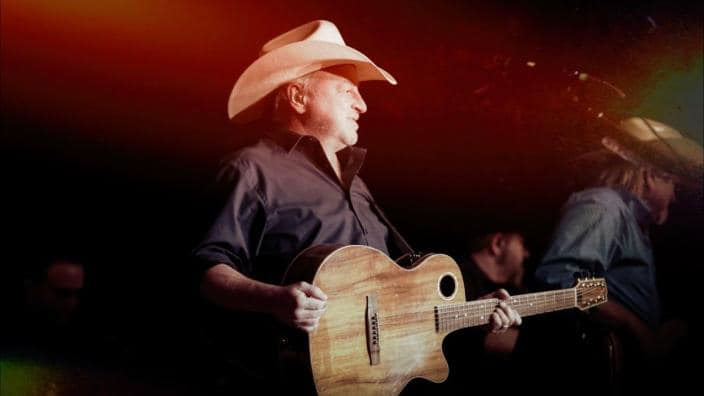
*We’ve added our favorite Mark Chesnutt songs to The Best of Pro Country playlist!*
 Pro Country
Thank you so much for sharing this. I’ve been a huge fan since the early 90’s. I’ve never had an opportunity to see Mark in concert until recently and even met him after the show in Vero Beach Fl. I was in the front row in a pink cowboy hat, then went to the bus after the show and asked him a really silly question, and forgot to get an autograph or selfie.
It was really nice to read this behind the scenes information about Mark. Knowing that Waylon was there for the recording of I don’t want to miss a thing, is making me want to re-listen to it. It wasn’t one of my favorites, I think my favorite is probably Price’s not hard to swallow, but I love them all.
LikeLike
I Was ther for Almost 10 years wit Him, and All I Can Say ,He Nails Erry Thing He Sings.. In My Book
THE BEST SINGER BY FAR
Rats Bac Quiet 👍🏼
LikeLike
Mark will always be in my memories of going from Cutters in Beaumont to all over the country to concerts and being with him his family and band members. Being there for there wedding of Mark and Tracie. And Waylon being born on my birthday. Even though at times he thought I was a stalker LOL keep going my friend. Big Mike!
LikeLike
Ive been a fan of Mark Chesnutt for quite a few years now,love his Texas style country voice ,I’ll think of something,Bubba shot the jukebox and Blame it on Texas are a few of my favorites,and his voice is so easy to listen to,that I’m still listening and singing along with him,and I just love a good Chesnutt country song,thanks Mark,and I also have to say,your son Casey is definitely a chip of the old block,he sounds so much like his Dad,love it!!!!!
Ron Geisbrecht
LikeLike