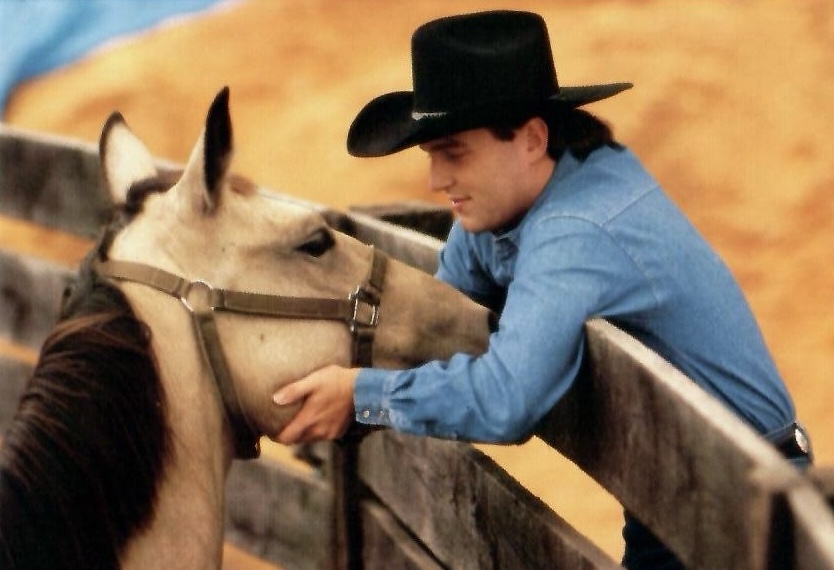
To an outsider, the country music career of Curtis Day may have seemed like a shooting star: here one moment, gone the next, with only an album left behind with which to remember his career.
What they may not know, though, is the years spent building that music career, that culminated in a self-titled album, released on Asylum Records in 1996.
From the honky tonks of Beaumont, Texas to the sacred stage of the Grand Ole Opry, Day was no stranger to hitting the road hard and earning fans. Even three decades later, he still hears from members of his old fan club who were touched by the music he made.
Before setting his sights on a music career, though, Day admits to aspirations of football stardom, which began to fade in his early college years.
“It all started for me in high school. I was a multipurpose player. They used me in the backfield, as a slot receiver, and as a strong safety on the defensive side of the ball,” says Day. “I was always good with my hands and had good foot speed, but I never had the height I needed. I was 5’6, 165 pounds trying to play football, and that’s not going to get you far [laughs].”
Day’s football career came to an abrupt end in the late 1980s when his college, Lamar University, cancelled the football season due to lack of funding. Soon after that door closed, however, another opened.
“In 1990, I was at my grandmother’s for the weekend. I was in the shower, singing. When I got out, she asked if it was me singing or if it was the radio. I told her it was me,” says Day. “She asked where I’d learned to sing. I told her I’d never taken lessons; I’d just hear a song and sing it.”
Soon, others were clued in to Day’s musical talent.
“My grandmother said she was going to put me in a contest. There was a little jamboree in Magnolia, Texas. I didn’t think anything of it,” Day admits. “I sang ‘Statue of a Fool,’ that Ricky Van Shelton had redone, and I ended up winning first place.”
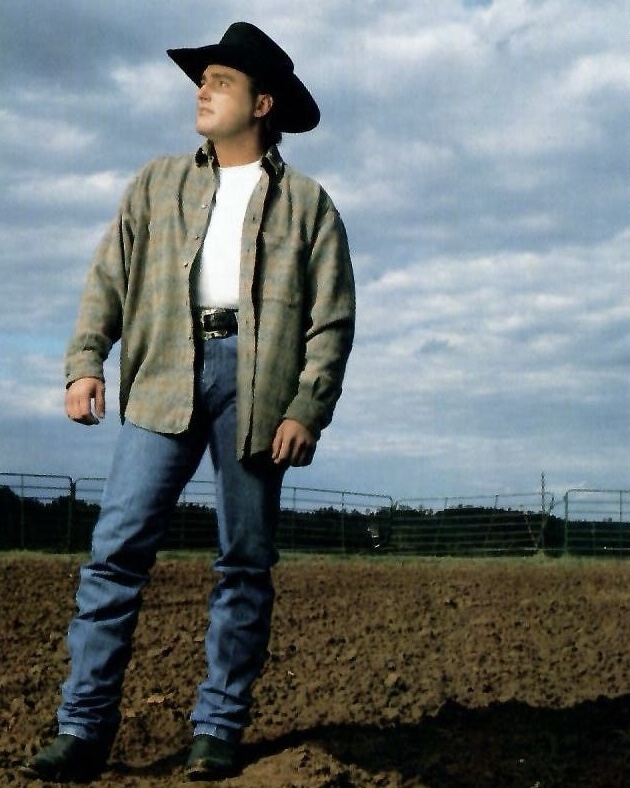
Just over a year later, Day formed a band and hit the road with his musical buddies.
“In 1992, we formed a band and played locally in Houston. My grandmother had a friend that was selling an old school bus, so she bought it for $500. We fixed it up, put bunk beds and a couch in there, and we made it out to be a tour bus!” says Day. “I was 22 or 23 at the time, and the band members were 19 or 20. We were playing house gigs and jamborees.”
One of those gigs eventually put Day in front of a few power players in the industry.
“We were playing at an ice house in Conroe, Texas. A gentleman named Roger Peters approached me. He played for the Kansas City Chiefs in the 70s and early 80s. After injuries, he decided he wanted to get out of it and be a manager in country music,” says Day. “He said he had a guy who was a financial backer, Jim Lawrence, who owns a petroleum service and had multiple businesses across the world. I thought they were feeding me a big line, until I went to Conroe and the man had a helicopter pad. He landed on a helicopter when I showed up! I knew he was the real deal.”
Day impressed Lawrence with his talent, but the latter insisted that he needed to upgrade his touring band.
“He listened to some stuff that the band and I put together on a cassette tape. He said he wanted me, but he didn’t want the band. I was nervous about leaving the band. I sat them down to talk to them, and they understood,” says Day. “In 1995, Jim told me to put a band together, because he wanted to start showcasing me. I was really good friends with Mark Chesnutt and Tracy Byrd in Beaumont. They’d already left and signed their deals. There were a few players who used to play for those guys that were still local, so I picked them up, and we started rehearsing.”
With Chesnutt and Byrd having signed record deals, and fellow Beaumont-born artist Clay Walker just earning a record deal himself, Day held showcases in hopes of joining the trio with a record deal in Nashville.
“In 1995, we held a showcase at the MGM Grand in Las Vegas. We rented out the grand ballroom, and had people come in from Nashville for the showcase,” says Day. “In the fall of that year, I did another showcase for Asylum Records. They came down to Beaumont. Kyle Lehning, who’d been producing Randy Travis for years, was the president of the label. He told me to come back to Nashville in a few weeks to sing for the A&R team.”
Soon after his plane touched down, Day earned himself a record deal.
“Kyle got on the piano, and he started playing ‘Today I Started Loving You Again.’ I started singing along with him, and in front of the A&R team, about three or four sentences into the song, Kyle stopped and asked what they thought. They all said ‘sign him,’” says Day. “Next thing you know, Kyle said ‘Curtis, we’re going to sign you, how would you like to be on Asylum Records?’ It didn’t feel real.”
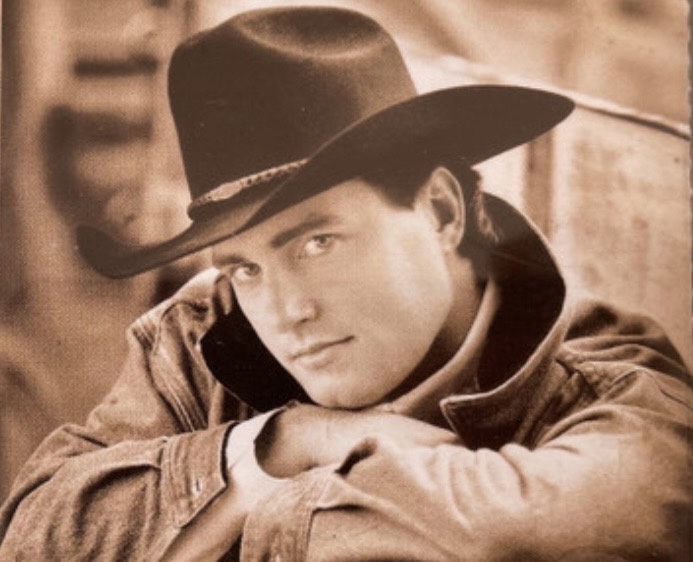
Day, Lehning, and co-producer Kevin Beamish [REO Speedwagon, Jefferson Starship, Y&T] entered the studio to record Day’s debut album in 1996.
“Kevin is what you’d call a ‘studio perfectionist.’ He’d be there for hours fine-tuning things. Kyle was focused on having authenticity come through the microphone,” says Day. “I had a great time working with Kevin, and Kyle is one of the nicest guys I’ve ever met. They were phenomenal in the studio.”
When the trio completed the album, they were happy with the finished product, though they left at least one soon-to-be hit on the cutting room floor.
“When I left the studio, it was exactly what I wanted,” says Day. “There were other songs that I wanted to record that were on hold by other artists. I had ‘Every Light in the House,’ that Trace Adkins eventually recorded, on hold, but you can only hold on to a song for so long before another artist takes it. The label wanted to hold off until the second album, because they wanted a number one hit for the second album. We’d also already picked out the ten songs and started production. We couldn’t discard one of them, because we’d have to explain to the writers why their song had been discarded.”
Instead, Asylum Records decided on “My Baby’s Cookin’” as the lead single from Day’s self-titled album, and soon after, Day heard himself coming over the radio airwaves for the first time.
“I’ll never forget that. I was back home in Beaumont. It sounds cliché, but I was just waking up, and the radio was on. When I woke up, I heard our local DJ say ‘Here’s one of our local artists that’s just come out on Asylum Records with his first single, ‘My Baby’s Cookin’,’ and it started playing,” says Day. “I jumped out of bed. My girlfriend at the time was in the bathroom, and she came running in. I was shouting ‘my song! My song!’ We both started jumping up and down on the waterbed!”
With the release of the album, Day hit the road with both headlining and opening slots.
“We were able to get booked with the Pro Rodeo Circuit. They called it the ‘Dancin’ in the Dirt’ tour. We’d go out to major rodeos in major cities, and when the rodeo was over, everyone could come out of the stands and down into the arena. They’d roll out a stage and we’d put on a concert.,” says Day. “There were also some artists I opened up for along the way. I opened for Tracy Lawrence in Des Moines, Iowa. I also opened up for The Doobie Brothers and George Strait.”
One of Day’s most cherished performances, though, took place at the legendary Grand Ole Opry.
“I showed up for soundcheck that day. I walked out on stage, and you start thinking about who’s been there: Elvis Presley, Merle Haggard, George Jones; artists that I used to listen to and sing along with,” says Day. “When it was time for me to go on stage, it hadn’t hit me how important it was until Bill Anderson called my name. Little Jimmy Dickens was standing beside me. He pulled me by the arm and said, ‘Son, don’t think about it and don’t forget the words!’ And I said, ‘yes, sir!’”
As soon as his feet touched the iconic circle, he did just that.
“When the curtain opened, that’s when it all hit. I started losing all the feeling in my legs. You’re in the circle, the microphone is there, and the band starts playing ‘My Baby’s Cookin’,’ I had a deer in the headlights look. I was staring out into the crowd, and I couldn’t think of the words! My bass player had to lean forward to give me the first few words, and then I was able to start singing. That’s how star struck I was,” says Day. “When I came off stage, of course Little Jimmy was standing there. He chuckled and said, ‘forgot the words, huh?! It happens to all of us.’”
Day’s follow up single, “The Truth is Hard to Swallow,” came out of the gates strong, before stalling in the mid-fifties on the charts.
“That one took off pretty well,” says Day. “I think a lot of Asylum’s dollars and cents got put into Bryan White, because he was doing so well. They were still new in Nashville at the time. They were fighting RCA, MCA and Curb. They couldn’t quite get over the hump.”
Soon, Elektra, Asylum’s parents company, decided to leave country music altogether, leaving Day in purgatory.
“In 1997, we were still touring and getting ready to cut the second album. Kyle Lehning walked into a big meeting in the office and said that Elektra didn’t want to work in country anymore, and that we were going to be moving to another label,” says Day. “He said he’d get back in touch with us in a few months while he was going to get the deal together.”
At the same time, Day’s financial backer, Jim Lawrence, gave him an ultimatum.
“He wanted me to cut some songs he’d written. I listened to them, and they weren’t very good songs. Imagine a big oil tycoon trying to write songs. He was a genius in the oil field, but he knew nothing about writing songs,” says Day. “I said ‘no,’ but Roger Peters told me if I didn’t cut at least a couple of his songs, he was going to pull his money and I was going to be out here on my own.”
Instead, Day opted to return to Texas and put his career on hold, until an unexpected player entered the fold.
“In 1998, I went to Beaumont and was working for my dad’s business. My road manager, Derek Peterson, is first cousins with Brett Favre. He said Brett was looking to get into country music, and asked if I’d be interested. Brett called me, and we talked about expectations. I went back to Nashville in 2000,” says Day. “I went to Byron Gallimore, who was cutting Tim McGraw’s stuff, and he agreed to be my producer. He gave me four songs and said we were going to pitch them to RCA.”
As quickly as Day’s new opportunity came, though, it fell apart.
“We cut the songs, and we were ready to go to RCA to get the deal done,” says Day. “At the same time, Brett checked into the Betty Ford Clinic because he was addicted to painkillers. The next day, his company said that all of his projects were going to be put on hold until he was out of rehab.”
Day, back at square one again, returned to Texas once more. After the release of an independent album, Tears, Day stepped away from music.
“It was 2001, and I was staring at starting all over again,” says Day. “I tried to do it on my own to sustain it. I did gigs in casinos. By the time I was getting money paid from the gigs and paid all my expenses, there was no money left over. In 2003, after Tears, I called it quits.”
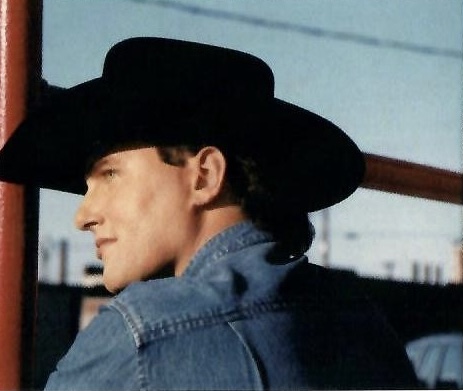
After pursuing music for over a decade, Day admits that the decision to step away weighed heavy on him.
“It was probably the hardest decision I ever had to make. I was so disappointed in myself. I hadn’t just let myself down, I’d let my family and friends down. I had a daughter, and I was trying to take off and have something for her when she got older. I had a lot of things weighing on me to ‘make it,’” says Day. “At the time, if you weren’t Garth Brooks, Tim McGraw, George Strait or Alan Jackson, it was going to be hard to get off the ground.”
In the two-plus decades since, Day has become a major player in the oil industry.
“Now, I’m in oil and gas,” says Day. “I’m in the inspection world. I work for the world’s largest oil company. I have a high-demanding job, and I’m very good at what I do. Our family name is built in that world now. We’re known across the country.”
Still, Day looks back on his music career with pride.
“For the most part, I wouldn’t change anything: the experiences, the places, the people I met and the friendships I made,” says Day. “There are things I would change about the industry, but the experience and friendships, I wouldn’t change them for anything.”
Even 30 years after his album was released, Day still hears from people who love it.
“It’s flattering. When people reach out and say good things about the album and the things I did, it’s surreal,” says Day. “I’m thankful that it meant something to someone, because to me, at the time, it meant everything.”
Every once in a while, Day still scratches his country music itch, be it on stage or in more intimate performances.
“I’ve done a lot of different gigs over the last 30 years since the album’s release. My first wife was a singer, and we’d sing in clubs. Friends would call and we’d do a few karaoke songs. I did a gig on New Year’s with some friends at a nightclub. The place got packed!” says Day. “Just the other night, my fiancé and I were in the hot tub. She’d never heard me sing live. I brought a speaker outside, had her pick karaoke songs, and I sang with no microphone, right there in the hot tub. It was 8 or 9 at night, so all the neighbors could hear. I sang about 10 songs! [laughs]”
Now 56, Day moves forward with lessons learned from his country music experience.
“Whatever passion you have, don’t give up on the dream. I gave up on mine. I found a different passion, and I’ve become very successful at it,” says Day. “Stick it out, do your best, and stay positive. Don’t let the negatives get you down. Never give up on your dreams.”
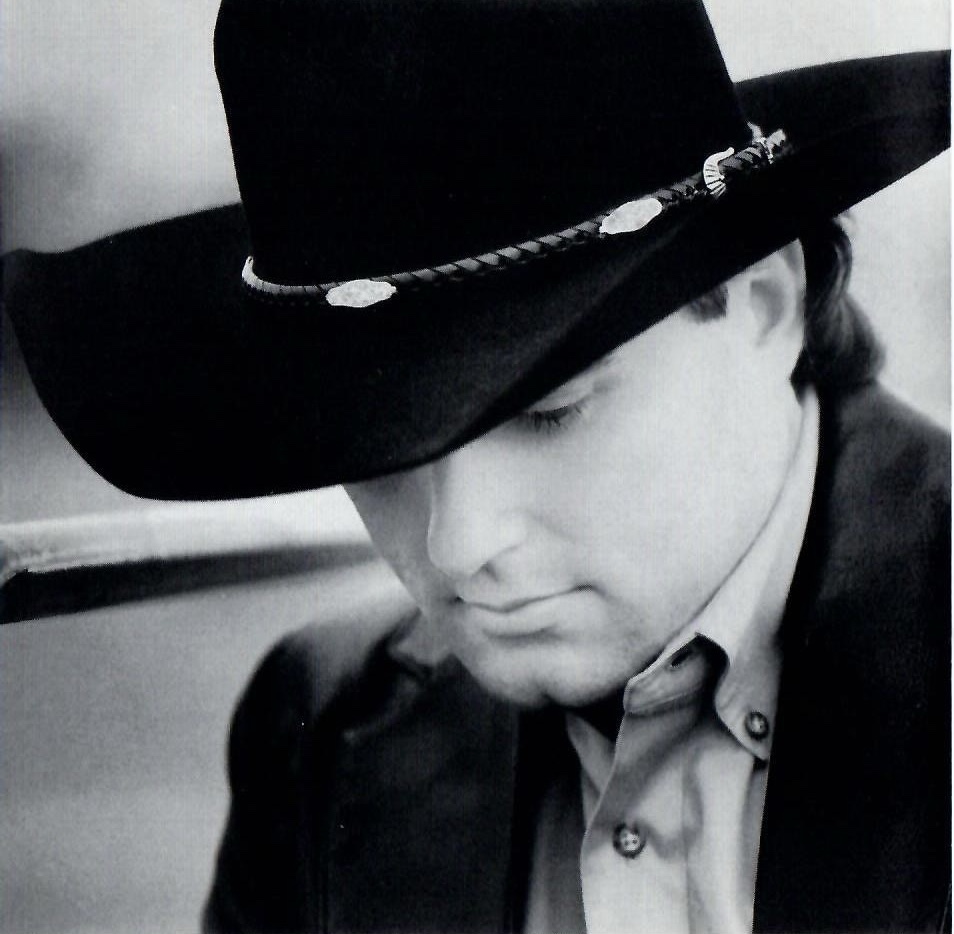
*All images scanned from 1996 CD booklet*


Leave a Reply