
On June 3rd, we were in Nashville, ready to cover CMA Fest the following day. We found our way to The Nashville Palace, where Randy Travis was being honored with a room bearing his name. Several artists, ranging from Drake Milligan to Ken Mellons, took the stage to honor the country legend, but it was an artist we’d never heard before, Jacob Tolliver, that stole the show.
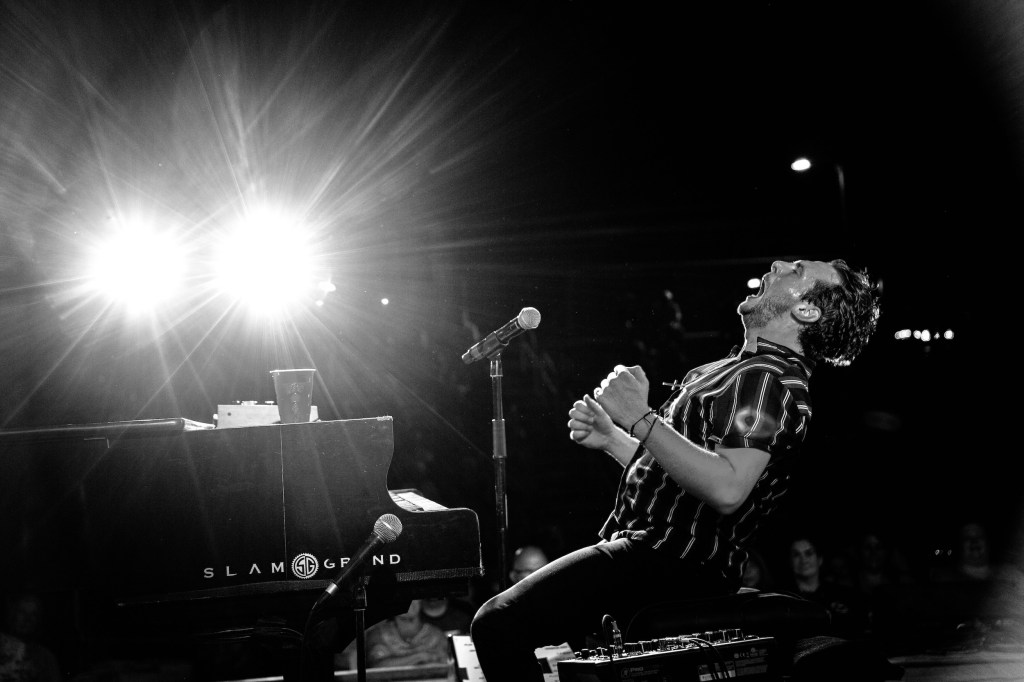
Tolliver set up a piano, center stage, and performed a striking rendition of Travis’s “Honky Tonk Side of Town,” an album cut from the mid-90s. His energy was palpable as he roared his way through the song. When we got back to our hotel, we had to know everything about him.
We learned that, from an early age, he could play piano by ear. We learned about his connection with Jerry Lee Lewis, and that he’d recently released a studio version of “Honky Tonk Side of Town,” produced by Travis’s longtime producer, Kyle Lehning. Most importantly, though, we learned that he was available to chat about all of that, and much more, at CMA Fest just a few days later. Read the result below!
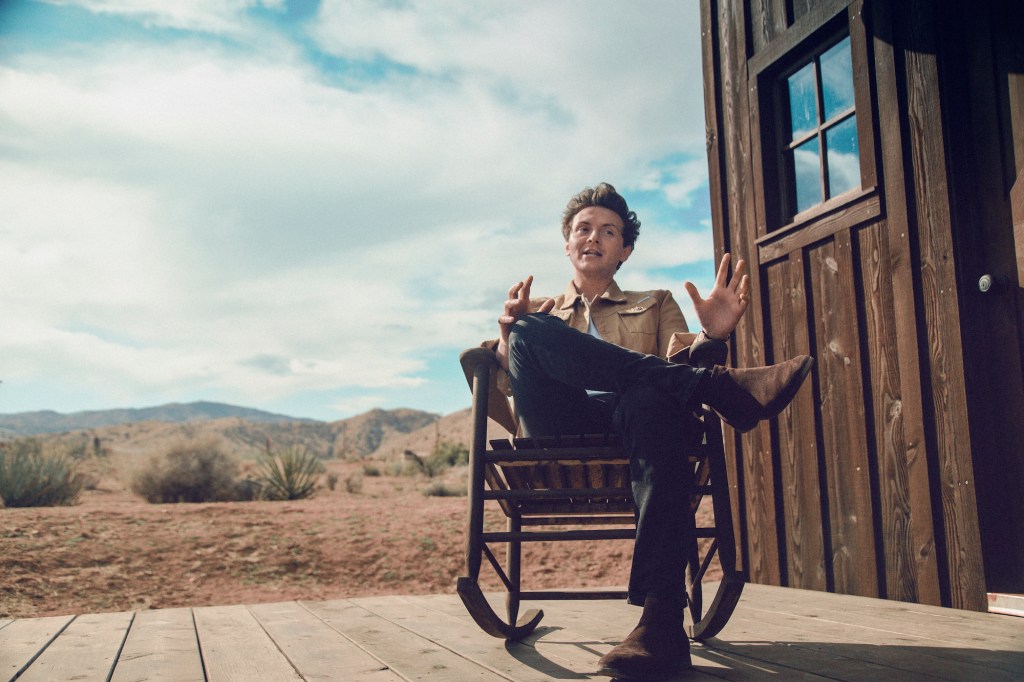
Pro Country: You began taking music lessons at eight years-old, but often diverted from your teacher and began playing by ear. How quickly did you realize you had that talent?
Jacob Tolliver: It was immediate. I wasn’t trying to do it; it wasn’t an intentional act of terror [laughs]. I would get the piece of music that I was supposed to practice for the week. My teacher was a very prim and proper woman, and she was about 80 years old. Through the week, instead of reading the page, I’d be jazzing up the piece. “Mary Had a Little Lamb” would have some extra flare to it [laughs]. She’d tell me, “Jacob, you’re not reading!” We did it for about nine months before she fired me. She went to my parents and said that I had a talent, but she couldn’t teach it. She suggested parting ways, and I was happy with it, because all she wanted to do was scales and boring music, and I always told her I wanted to play the fun stuff. I didn’t know what that meant, but I knew it wasn’t that.
PC: You eventually put your keyboard away for about six years before picking it back up around age 14, and quickly mastering the instrument within a few months. What drew you to pick the keyboard back up, and how many hours each day were you playing it at that point?
JT: I was cleaning my bedroom when I was 14, found the keyboard, plugged it in, and started playing. My dad heard it and popped his head into my bedroom and asked if it was me. He said “don’t stop that!” Within three months, I had it down. I understood it entirely.
PC: Your father introduced you to Jerry Lee Lewis in your early teens. Can you talk about what it was about his music and way of performing that struck a chord with you in that moment?
JT: He’d told me for about a year that I was playing like Jerry Lee and that I needed to listen to his music. I was 14, so my parents were always wrong [laughs]. I thought he would just be a lame piano player. After about a year of playing, he finally had enough. One day, he called a local radio station and had them play “Great Balls of Fire.” I could see everything he was doing. I could visualize the whole thing. The next day, I had my mom take me out to get a Jerry Lee Lewis and Little Richard CD.
PC: Just before starting college, you had the audition to audition for “Million Dollar Quartet” in Las Vegas. Can you talk about making the decision to put college on hold to pursue that opportunity?
JT: That was a decision! [laughs]. I was 17 years-old. Books were paid for, the dorm was paid for, and I was going to Ohio State University. I was super excited.
I got a message on YouTube from a casting agency in Las Vegas that was casting for Million Dollar Quartet. I knew of it because it had just won the Tony Award that year for Broadway. They asked me to call them. My parents were at work, but they said they’d like to fly me out the next day to audition in Las Vegas. I told them I needed to talk to my parents when they got home from work.
When I talked to my parents, we decided there was no harm in auditioning. My mom talked to them to make sure it was legit, and I went out to audition. I got a callback, so I had to stay a few extra days. Of course, I had to call mom and dad to tell them I had to stay in Vegas another day. I’m sure they were freaking out [laughs]. I had to read over the script with the director, and he saw enough to know that I could learn the role. They sent me home, and the following Thursday, I turned 18. The next day, they told me I got the job and had to decide if I wanted to take them up on it or go to college. Then it was time to make the real decision. It was a long and hard decision, but we finally decided that college would always be there. It was a six-month contract, so we thought after that six months, I’d go back to Ohio State. I six-monthed myself several times, and was there for four years [laughs]. Finally, at some point, it became evident that I was a musician and that that was the path I was on.
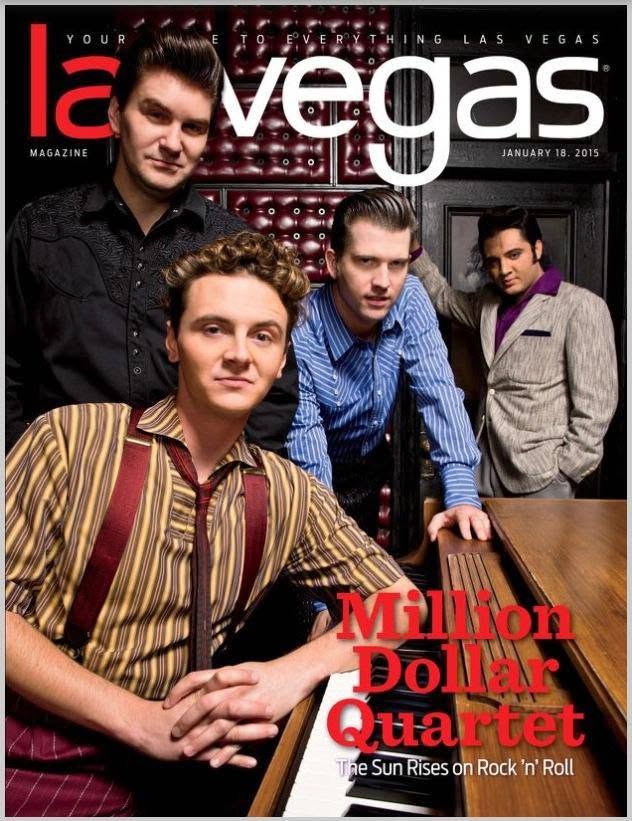
PC: After “Million Dollar Quartet,” you had the opportunity to open for Jerry Lee Lewis during the last three years of his touring career. What was it like to be around Jerry so much and to have the opportunity to see someone who shaped your musical DNA?
JT: It was really bizarre! It felt like I ripped a page out of a storybook. You just don’t go on the road with your musical hero, much less hit it off with them. There were times that I’d be sitting in Jerry Lee’s back living room, feet propped up, drinking a root beer float and watching Gunsmoke, just hanging out. It was incredible getting to know him and spending that time on the road with him.
He taught me so much. He wasn’t a guy who would intentionally try to teach me something on a given day, but I’d observe how he did things.
We actually recorded a song together! We haven’t put it out yet. I’m working on it this week, and it will be out soon!
PC: With a long history of music before its release, what emotions came with releasing music for the first time with “Sunset Cemetery”?
JT: It’s been an incredible journey with releasing music. There’s so many ideas flowing in my head at all times. Sometimes, it’s a gospel song, and sometimes, it’s a pop song or a country song. My mission when I started songwriting and recording was to ignore genres and to write what comes out of me. I don’t know how “Sunset Cemetery” could be classified; maybe indie pop, but then we have songs like “Honky Tonk Side of Town” which are straight down the road country. It’s all me, and it’s been a great thing to get them all out. If you don’t record them and release them, they’re just stuck in your head. And because I’ve released them, I’m able to let those ideas go, and there’s a whole new batch of ideas in my head.
PC: About a year ago, you released a fantastic cover of Randy Travis’s “Honky Tonk Side of Town.” Can you talk about how that opportunity came and how you came to choose the song?
JT: I was asked to go out on the road with Randy Travis on the “More Life Tour.” They asked me to do a Randy song, which I was flipping out about. I didn’t know what to do. I literally went through every album he ever released, and went through each song, beginning to end, and would make a check mark next to songs I thought I could do something with. I kept going back to this song he released in the 90s, “Honky Tonk Side of Town.” It wasn’t a single, it was an obscure B-side buried on an album, which I thought was to my benefit, because they’d never know how badly I was screwing it up [laughs]. Sure enough, I was able to make the arrangement mine, and it went over so well at the first show, that it turned into more shows. It turned out so well that we decided to go into the studio and cut the song. We went in with Kyle Lehning, who recorded all of Randy’s hits, to cut the song. It doesn’t take that long to cut one song, and we already had the musicians there, so we cut five or six more songs that day. That went over so well that it looks like we’ll be going back in the studio with Kyle again this summer!
PC: This week, you had the opportunity to play “Honky Tonk Side of Town” with members of Randy Travis’s band, and in front of Randy Travis, at The Nashville Palace. Can you talk about how special it has been to perform in front of Randy, and with his band, on a show like that and on the “More Life Tour”?
JT: It’s a little weird that I’m getting used to it. Similar to Jerry Lee, I have to take a moment to step out in the middle of performances. There was a quick second the other night where I took a screenshot in my head of Randy and Mary smiling and fist pumping. It was crazy. It’s a little sad to me that it’s becoming normal. It’s still so special. They’re the sweetest people on earth.
PC: “If Your Phone Ain’t Ringing It’s Me” is a fun, rollicking tune that you co-wrote with Rick Ferrell. Can you take us in the room and talk about how the song came together?
JT: Almost every song that I’ve been a part of writing, I come up with the title. This one was a little different. I went out one night in the middle of Covid, right when restaurants just started opening up. A buddy of mine and I were catching up, and while we were sitting there, he said he had a song idea that he’d been thinking about for months called “If Your Phone Ain’t Ringing It’s Me.” He said I should write it. I thought it was a stupid title, but I put it on my list of song titles [laughs].
I was writing with Rick Ferrell last year. We got onto a country melody, and we couldn’t figure out what it was about. Finally, I said I had a song title that might actually work for the song. The song wrote itself in less than 30 minutes.
PC: Your latest single, “Tequila Sheila,” was popularized by Bobby Bare and written by Shel Silverstein and Mac Davis. Can you talk about what you love about the song and what drew you to cut it?
JT: They did a big 90th birthday celebration for Bobby Bare in east Nashville last year. They asked me to play another song, but I didn’t think I’d be able to do a stellar version of it. I really dug into his catalog. “Tequila Sheila” was never one of my favorites songs of his, but when I heard it with the ears of covering the song, I thought I could do something with it. We texted Bobby Bare Jr. back, asking if I could do the song. Jamey Johnson was supposed to do it, but he had three songs, and they convinced him to take it away. It went over so well that night; the crowd went nuts! The session with Kyle Lehning was the next week, and we had some time at the end of the session. We decided to fill the time with that song. We didn’t know if we’d ever use it, but it turned out really good! Kyle asked what I thought about adding mariachi trumpets to it, which I thought sounded awful [laughs]. He told me to trust him, and it came out amazing. At that point, we knew we had a song that was good enough to release.
PC: Your last three singles have been produced by Kyle Lehning, who has produced albums for country greats, including Randy Travis, George Jones and Dan Seals, among others. What has it been like to work and collaborate with such a successful, well-respected producer?
JT: He’s so interesting. I love his approach. He sits back and lets the artist be the artist. If there’s something that needs to be tweaked, he’ll speak up, but he’s not in there saying “this is the way it needs to be.” He lets the song be what the song is. He’s not trying to fit square pegs into round holes. It’s a breath of fresh air working with him.
He’s so funny, because he’s so brilliant, but he takes the approach of “I know nothing. I know as much as you do, and we’re figuring it all out on the floor right now.” He doesn’t have an ego at all.
His other great attribute is his ability to pick a great band. He picked an amazing group of players that day.
PC: You mentioned there was additional music cut with Kyle Lehning. You’ve stayed busy with releases over the past few years. What information can you give about what will follow “Tequila Sheila”?
JT: We’re going back in to record another batch with Kyle! I’m also sitting on a whole album of “Sunset Cemetary”-type tunes, too. I also have the song that I cut with Jerry Lee that we’re finishing up. I’m also sitting on a gospel album that I wrote and want to record. There’s a lot of irons in the fire!
PC: With “Tequila Sheila” now released, what do you have planned for the rest of 2026?
JT: I have a lot of shows coming up! We’ll be doing those, releasing more music and doing all the things!


Leave a Reply