On June 2, 1986, a new artist named Randy Travis laid the foundation that would change the course of country music.
On that date, he released his debut album, Storms of Life, which introduced the country music world to a once-in-a-lifetime voice that would top the charts 16 times in the coming years, all the while, steering country music back towards a traditional sound. Artists like Alan Jackson and Garth Brooks reference the album as transformational to the genre.
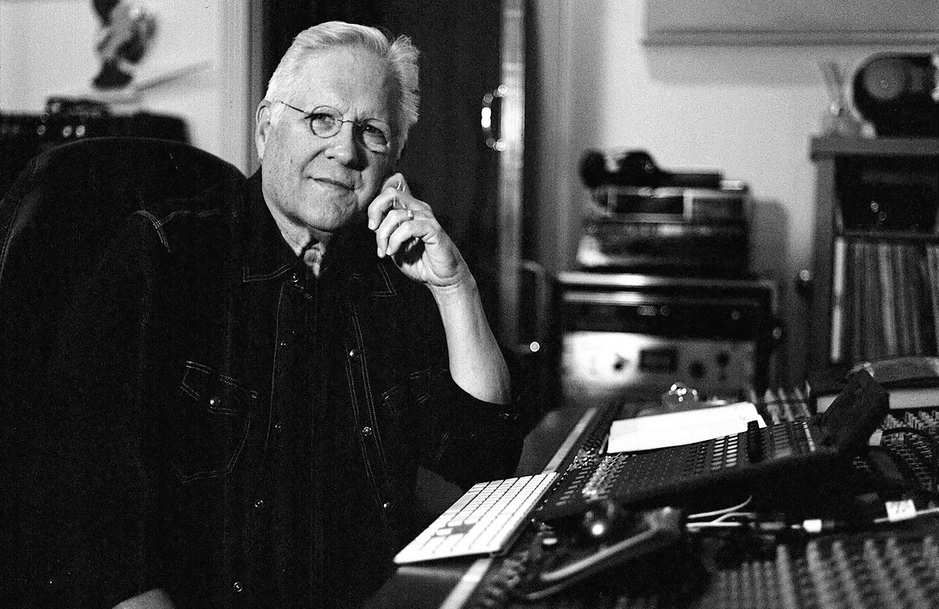
By his side for nearly every studio session has been longtime producer, Kyle Lehning. Known at the time for producing artists like Dan Seals (including England Dan & John Ford Coley) and Phil Everly, Lehning recalls hearing Randy; who was performing as Randy Ray and simultaneously working at The Nashville Palace, sing for the first time.
“I was producing Keith Stegall, who, at the time, was an artist on Epic. He came into the studio one day with a cassette in his pocket. He said, ‘hey, would you give this a listen and tell me what you think?’” says Lehning. “I put it on, hit play, and literally, about 20 seconds into it, I stopped and asked who it was. He said it was a guy named Randy Ray, who was a catfish cook at The Nashville Palace. Keith said he was making a live album on him (eventually released as Randy Ray: Live at the Nashville Palace in 1983). I told him that I thought Randy was terrific. Keith agreed, but he couldn’t get anybody interested in him.”
Lehning knew he needed to see Randy Ray perform.
“Keith said that Randy played almost every night,” says Lehning. “I went out the next night, and he sounded exactly like he did on the tape. There was an unpretentious ease with the way he was singing.”
Through a few industry contacts and his reputation, Lehning helped Ray, soon-to-be renamed Randy Travis, sign with Warner Brothers Nashville.
“Keith Stegall’s manager at the time, Charlie Monk, said that Martha Sharp at Warner Brother had been out to see Randy a few times, and that she was interested. He suggested I call her and tell her what I thought about him,” says Lehning. “I don’t think Martha and I had ever met at that point, but we knew each other professionally. I told her, ‘I understand you’re thinking about Randy Ray. I went out to the Palace the other night, and if you’re thinking about signing him, I’d like to throw my hat in the ring to potentially work with him.’ Martha has gone on record saying that conversation is what led her to push to sign Randy to Warner Brothers.”
While country music in the mid-80s leaned in a pop-oriented direction, Travis’s traditional country vision was clear from the start.
“Keith and I co-produced four side sessions. None of us, Keith, me or Randy, cared about what was or wasn’t happening. We just knew that he was the real deal,” says Lehning. “He was unshakable in his faith in his direction. It was clear that we were going to make very traditional country music.”
Warner Brothers elected to introduce Travis with “On the Other Hand,” a Paul Overstreet and Don Schlitz co-write that had been cut by Keith Whitley a year prior. Though the song peaked at number 67 on the charts, Lehning and team could sense great things for Travis.
“Martha Sharp and I were standing on the side of the stage at Fan Fair at the Nashville Fairgrounds. There were about 25,000 people in the grandstands. He started strumming the opening chords to ‘On the Other Hand,’” says Lehning. “When he opened his mouth and sang ‘on one hand…,’ all 25,000 people stood up. My jaw dropped. I thought maybe they’d pulled a Lee Greenwood and dropped an American flag behind him, but that wasn’t the case. They stood up, I think, because they recognized a voice telling them a story that they knew they wanted to hear. You can’t manipulate that. Things either hit a nerve or they don’t. And he wasn’t Mr. Dynamo on stage. He just stood in front of the microphone and strummed his guitar. When that happened, Martha and I looked at each other and said, ‘maybe we’ve got something here.’”
After the song stalled on the charts, though, Keith Stegall decided to step down as co-producer to focus on other endeavors.
“’On the Other Hand’ sounded terrific on the radio. And so did Randy,” says Lehning. “Keith was going through a difficult personal time. He was an artist on Epic, and a very successful songwriter. He felt that when the record died in the 60s, it was too much pressure on him to try to support another recording artist’s career with everything he was juggling. He decide to step out of the co-production situation. Thankfully for me, I didn’t have any other options! [laughs].”
With their next batch of songs, Travis and team found his breakthrough hit.
“We went back in the studio, picked more songs and cut more sides,” says Lehning. “That’s when we came up with ‘1982.’ That broke through and became a top 10 hit for him.”
After the success of “1982,” the team went on the hunt for songs that would comprise his debut album, Storms of Life.
“It was easy to find songs, because nobody was looking for traditional country in 1985. That was the era of crossover success. People were working at country radio, but they would also cross over into pop. Record companies looked at that crossover potential as something that would trigger more sales,” says Lehning. “Traditional country was not in the target range of what people were looking for, so consequently, we had our pick of a lot of great, unrecorded traditional country songs.”
Lehning remembers feeling an immediate chemistry with Travis in the studio.
“We developed a strong dynamic right away. That’s a credit to him. He was so clear about his dedication to traditional country music that that’s what he was going to do, whether he was successful or not. He was completely faithful to what he was doing,” says Lehning. “That made my job really clear. We always knew when we were on the right track.”
When Storms of Life was completed, Lehning recalls telling Travis that selling 40,000 copies would be successful enough to make a second album. As “On the Other Hand” was re-released as a single in late April of 1986 (and topped the charts) and Storms of Life released in early June, the album sold over 100,000 copies in its first week. Lehning says Travis was unphased by the sudden, unexpected success.
“I never saw it affect him in a negative way. It didn’t change who he was,” says Lehning. “I think he was as surprised as any of us that it became as successful as it did!”
Travis was equally surprised when the album crossed over to the pop charts.
“Janice Azrak, who was a marketing person at Warner Brothers, told me that Randy came into the Warner office, and everybody was really excited. The album was in the top five on Billboard’s Top 200 Albums. He walked in there, and they said “look, Randy, you’re on the Billboard chart!’ He asked if it was the pop charts. When they said yes, he said, ‘I’m a country artist, get it off there!’” Lehning says with a laugh. “They had to explain to him that it wasn’t just the pop charts, it was the biggest-selling albums, no matter the genre. After that, he was okay with it. [laughs].”
As the time came to record his sophomore album, Always & Forever, Travis and team felt a natural pressure to match the success of Storms of Life. The pressure dissipated when they found a soon-to-be career-defining song.
“There’s always a hope that the second album is going to do well. Sophomore albums are notoriously difficult. We got very fortunate, because Don Schlitz and Paul Overstreet were writing great songs. When we were looking for songs again, they presented us with ‘Forever and Ever, Amen.’ As soon as you heard that song, you’d have to be Hellen Keller to not know that was going to do well,” Lehning says with a laugh. “We went into the studio feeling pretty good about that song.”
“Forever and Ever, Amen” topped the charts, as did each additional single on Always & Forever. The final single on the album, “I Told You So,” proved to be an unexpected hit to Lehning.
“That was a humbling moment for me. I must admit, for whatever reason, that wasn’t one of my favorites. It’s almost embarrassing to admit that. However, we made a really good record, and Randy sang the fool out of it,” says Lehning. “He wrote a lot, but not everything he wrote made it onto the albums. Between he, I, Martha and his manager, Lib Hatcher, we were the braintrust about which songs would make it onto the albums and which ones didn’t. A song had a gauntlet that it had to go through to make an album. When it became a huge hit, I was thrilled, especially because he wrote the song.”
Lehning recalls Always & Forever being more of a struggle, though, as Travis was in the midst of performing hundreds of tour dates.
“By that time, he was on the road constantly. He was doing 200 dates per year. His voice wasn’t as easy as it had been on the first record,” says Lehning. “Oftentimes, we would go in the studio to get a vocal, and his voice wouldn’t be in shape. We’d rest for a day or two, which always worked out much better. It took a little longer to do that album.”
Old 8×10 and No Holdin’ Back followed, landing six more number one singles, before Travis released Heroes & Friends in 1990, which featured duets with the likes of legendary artists, including George Jones, Dolly Parton and Willie Nelson, who all felt an immediate camaraderie with Travis and his music.
“It was like when those 25,000 people stood up. They all recognized something that was so familiar to them. It was like they were saying, ‘come on in the house,’” says Lehning. “When Randy was in the presence of those great artists, they all recognized that it was the same brotherhood. They were connected through the work. That became a really important part of his life.”
By the time the second single, “Forever Together,” from his next album, High Lonesome, topped the charts, 16 of the 18 singles he’d released from “On the Other Hand” to “Forever Together” had topped the charts, and Travis became one of the biggest artists in country music.
“This is going to sound ridiculous, but you start to almost take it for granted,” says Lehning. “We were so busy trying to figure out what to do next. We were appreciative of the success, but we were hard at work and trying to stay true to the vision.”
To coincide with two greatest hits albums in 1992, Travis, worn from years on the road, took a hiatus from touring, citing exhaustion.
“You couldn’t not see it. He was touring all the time. He was in terrific shape: he took really good care of himself, watched his diet and worked out,” says Lehning. “It’s one thing to play a couple hundred dates a year, but traveling to and from them is a whole different strain on the body. He wasn’t just singing, he was also being interviewed and talking to fans. His voice was being utilized all the time. It physically wore him out.”
When Travis returned with This Is Me in 1994, he earned two more number one singles and two number twos.
“It was always the same compass point. We always knew where north was. Coming back wasn’t a difficult thing for him to do,” says Lehning. “That was a really good album. I love the title track. He sang great on it.”
The chart success stalled, though, with 1996’s Full Circle, with the album’s lead single, “Are We In Trouble Now,” peaking at number 24 on the charts.
“I was in the middle of running Asylum Records, but my deal with Asylum was that I was allowed to produce Randy,” says Lehning. “If I pulled that record out, I’m sure I could tell you which ones should’ve been hits that the record company screwed up [laughs].”
Following Full Circle, Travis released You and You Alone and A Man Ain’t Made of Stone for DreamWorks Records, the first two albums (aside from the Wind in the Wire soundtrack in 1993) that Lehning didn’t produce. Instead, the albums were produced by Byron Gallimore and James Stroud.
“Randy and I stayed in touch through the whole thing. There was some really good stuff on those albums they did together. I was pleased to see that they were doing well and making great records. I know and respect both of them a lot as producers,” says Lehning. “There’s a song called ‘A Little Left of Center’ that I love. When I really like something, I get jealous. That was a great fit for him.”
Lehning was back in the producer’s chair when “Three Wooden Crosses” came across his desk a few years later.
“We were working with Word Records. At the same time, I was producing Michael Peterson with Blake Chancey. We were about to finish an album, and Michael walked in the studio one day saying he had heard a song that he thought was a perfect fit for Randy. It was on a CD, and it was ‘Three Wooden Crosses,’” says Lehning. “I listened, and thought, ‘oh my gosh, this is a fabulous song.’ It was so interesting and had such an interesting twist. I told Michael that it could be a hit, and he really needed a hit. He had found the song, and I told him that he should consider recording it. He said he didn’t hear it for himself; he could only hear Randy singing it.”
The song almost didn’t make it to Travis, though.
“I went to Doug Johnson, one of the co-writers, and asked if I could play it for Randy. He said I could, but that he was going into the studio the following day to record the song with an artist he was producing at the time. I told him to let me know if it worked out,” says Lehning. “Lo and behold, he called the next day and said they’d decided not to record it. I sent it to Randy, and he called back saying he loved it. He said he was on the treadmill when he heard it, and when the song got to the bridge, he had to stop the treadmill, get off, rewind the cassette and play it again to understand what had happened.”
Lehning and team knew they needed to act quickly to get the song recorded.
“That’s the only song we ever recorded where Randy wasn’t present in the studio when we recorded the song. We decided to rush record it and put it on the album that we were putting out for Word,” says Lehning. “I booked the studio, but Randy wasn’t available. Daryle Singletary ghost vocaled the song for Randy. Daryle had a great country voice, and he sang in the same range as Randy. Daryle sang it great in the studio. When we finished cutting the track, Daryle walked into the control room and said, ‘that’s going to be a big hit.’”
After a long run on the charts, “Three Wooden Crosses” became Travis’s final number one to date, and was also a certified Platinum single. Five years later, Travis returned with Around the Bend. Though it didn’t provide the same chart successes the team had previously enjoyed, Lehning remembers the album fondly.
“That was a really fun record. There’s a lot of experimenting that went on there. I really like that record, and I thought he did a great job on it,” says Lehning. “Sometimes things connect, and sometimes they don’t. That one just didn’t seem to catch the public the way we hoped it would.”
In 2013, the country music community was shocked with the news that Travis had suffered a stroke. By his bedside in the hospital, Lehning recalls initial troubling news from Travis’s doctors.
“He went into the hospital on a Sunday night. Jeff Davis, Randy’s road manaer, called me that day or the next morning and told me what happened. I got to the hospital in Waco on Wednesday morning. By then, there were a bunch of folks gathered there. The doctor’s discovered that he’d had a stroke, and the prognosis was not good,” says Lehning. “It was a very sobering, tough time. Mary, his wife, was unbelievable, though, and a huge part of him being here today is thanks to her leadership with him.”
Soon enough, Travis began walking again, and even regained some ability to speak.
“It was terrific. A lot of that is attributed to his spirit,” says Lehning. “Randy has always been a fighter. He’s a strong guy. He willed himself to persevere, and that’s why he’s here today.”
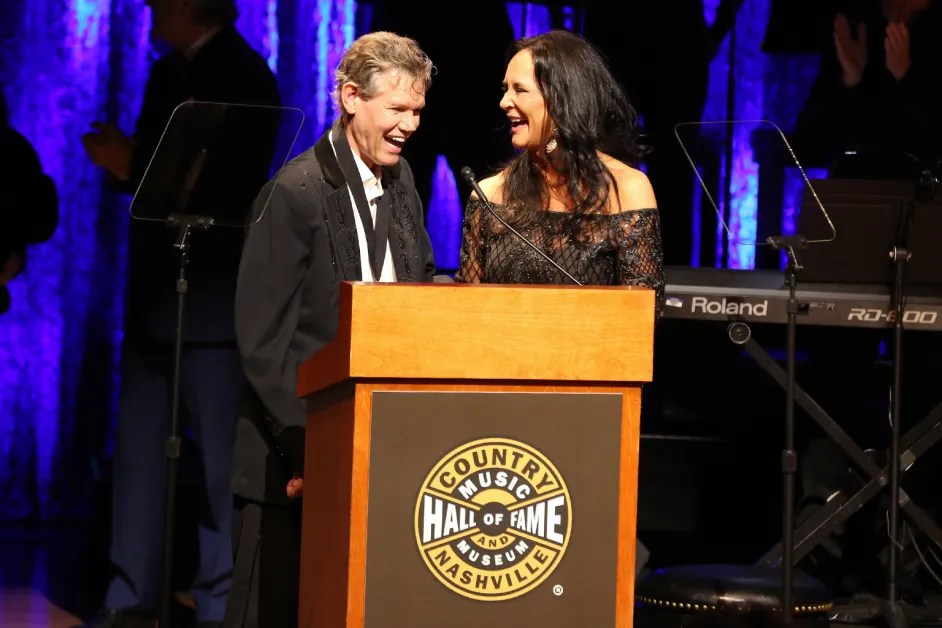
Lehning was also by Travis’s side as he was inducted into the Country Music Hall of Fame in 2016.
“Gosh, that was very gratifying,” says Lehning. “It was amazing to see the support from the music community and how proud everybody was for him to be a part of that special circle. And he very much deserved to be there.”
On May 3, 2024, Travis and Warner Music Nashville shocked the world with a brand new Randy Travis song, “Where That Came From,” made with AI alongside Randy and Mary Travis. When the idea first came from Warner, though, Lehning admits initial hesitancy.
“Cris Lacy, who runs Warner Music Nashville, called me in the summer of 2023. I’d known her since she was a song plugger in Nashville in the early 90s, and have always had great respect for her. She started the conversation with ‘what would you think if we could give Randy his voice back?’ I told her to tell me more,” says Lehning. “She said that there had been conversations at the label about using AI for vocals, and she immediately thought that if there’s anybody who could make that work, it would be Randy. She started to explain a company in England was working to make models of different vocals. Now, I grew up in southern Illinois. Any new idea is a bad one! [laughs]. I immediately thought that it sounded weird. She said Randy and Mary thought that it was worth the gamble, and that’s all I needed to hear to get on board.”
Lehning soon got the ball rolling on the project.
“I was asked to provide stripped down vocals from Randy over the course of his career. I was able to give the folks in England 42 vocal performance: dry, no reverb or effects; nothing but his voice. The recordings spanned from 1985 to the last stuff he recorded,” says Lehning. “That was in August, and I didn’t hear back from the folks in England until November.”
Next, it was time to test it out on a song.
“They sent me a model to test out. I literally sat on it for about two weeks. I didn’t know what to expect, and I didn’t know what to use as a test,” says Lehning. “I was thinking one day: in 2011, Jerry Douglas and I had produced five sides on an artist named James Dupré for Warner Brothers. As things happen from time to time, nothing ever came from it, but one of the songs we recorded was ‘Where That Came From.’”
Using the model, Lehning was able to hear Travis singing the song.
“I went through the process of importing James Dupré’s vocal into the Randy Travis model. I converted it from James’s voice to Randy’s voice, and then exported it from the model and back into the session, and lined up the audio files so it would play in the proper place,” says Lehning. “I hit play, turned off James’ vocal and turned on Randy’s vocal, and Randy’s voice came out of my speakers singing that song. I was taken aback. It was a very powerful moment for me.”
After some minor tweaks, it was time to show the song to Randy and Mary Travis.
“It wasn’t perfect, but it was stunningly good right away. I started hearing little things that needed to be fixed, like some phrasing or pitch things. We worked on it, on and off, for a couple weeks,” says Lehning. “I finally got it to a place where I felt like I could play it for Cris Lacy. She called me back, blubbering. We sent it to Randy and Mary, and Mary called back blubbering. Randy thought it was terrific.”
One more song using the Randy Travis vocal model, “Horses in Heaven,” followed less than a year later. And as the close of 2026 approaches, so does the release of a new Randy Travis album; his first album of new material in 18 years.
“It’s all unreleased music. These are songs that we’ve had in the can for years. It’s 12 songs that nobody has ever heard before, and it’s really good!” says Lehning. “It’s classic Randy.”
With the new, currently undated album on the way, Lehning theorizes that the simplicity of Storms of Life, and constant mysteries of the music business, have kept the album relevant, four decades later.
“It’s not a complicated record: they’re great songs that are simply produced. A lot of the tracks on the album were recorded to a 24-track machine, and some of them only have 17 tracks with all the instruments. It’s pretty sparse,” says Lehning. “For me, it’s a mystery any time a record hits a nerve with the public. When I grew up, they always said that the record business was about a 10% success rate. If everybody knew what the public was looking for, we’d do it all the time. The mystery of it is the part that always intrigued me, and I love that about special music.”
With all of the special music Travis has recorded over the years, Lehning does have a few favorites.
“’If I Didn’t Have You’ is one of my favorites. It’s such a unique song and he does such a great job on the vocal. Also, ‘Diggin’ Up Bones.’ Any time you can have a song with ‘exhuming’ in it, how do you not do that?!” Lehning says with a laugh. “Another one of my favorites is one I didn’t produce. Richard Perry produced ‘It’s Just a Matter of Time,’ and I always thought that was such a brilliant pairing of artist and song.”
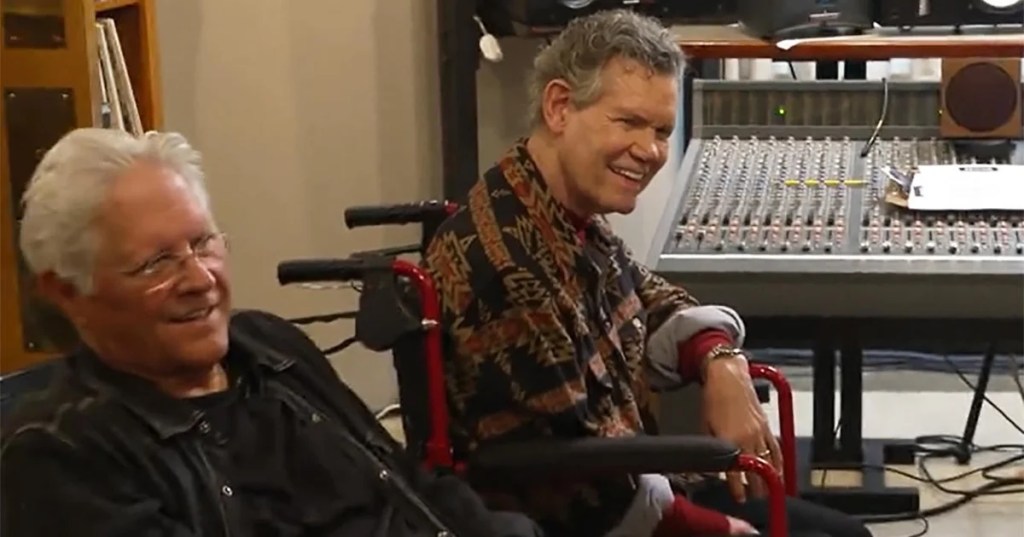
Lehning is also thankful for the special, four-decades’ long pairing of artist and producer.
“We have a special bond,” says Lehning. “There was never any kind of written agreement between the two of us. He could’ve picked any producer he wanted, any time he wanted.”
For four decades, the pair stayed loyal to each other, all the while, recording some of the greatest country music put on record.
“The first time I really appreciated his loyalty to me was very early on. I was in a meeting with Randy, Martha Sharp and his manager, Lib Hatcher, listening to songs. When one of the songs was over, Randy said ‘that’s a Lefty kind of thing.’ I was sitting next to him in the office, and I said ‘Lefty who?’ He was wearing a sport coat, and he pulled a cassette out from the pocket: it was Lefty Frizzell’s greatest hits. He handed it to me and said ‘you probably ought to listen to this,’” says Lehning. “I listened on the way home, and I immediately understood why he wanted me to hear it. I’m forever grateful that when I said ‘Lefty who?’ that he didn’t try to find another producer. We’ve had a lot of fun working together, and have a lot of mutual respect for each other. I couldn’t ask for a better artist to be aligned with all these years.”


Leave a comment